
Soccer dignitaries from around the globe will gather on Monday for a special gala in Paris where the winner of the prestigious Ballon d’Or (Golden Ball), awarded to the world player of the year for 2018, will be officially announced.
It was in 1956 that respected soccer magazine France Football came up with the idea of honouring Europe’s best player by polling the top soccer journalists across the continent and awarding the Ballon d’Or.
Formerly known as the “European Player of the Year Award,” the Ballon d’Or was given to the best player during that calendar year. From 1956 to 1994, a player had to be of European nationality and play professionally in Europe to qualify — thus, legends such as Argentina’s Diego Maradona and Brazilian legend Pele were not eligible.
England and Blackpool star Stanley Matthews, known as the Wizard of Dribble, won the inaugural Ballon d’Or in 1956, beating out Real Madrid legend Alfredo Di Stéfano and French star Raymond Kopa. Di Stéfano and Kopa would have their days in the sun, though: Di Stéfano won it in 1957 and 1959, and Kopa in 1958.
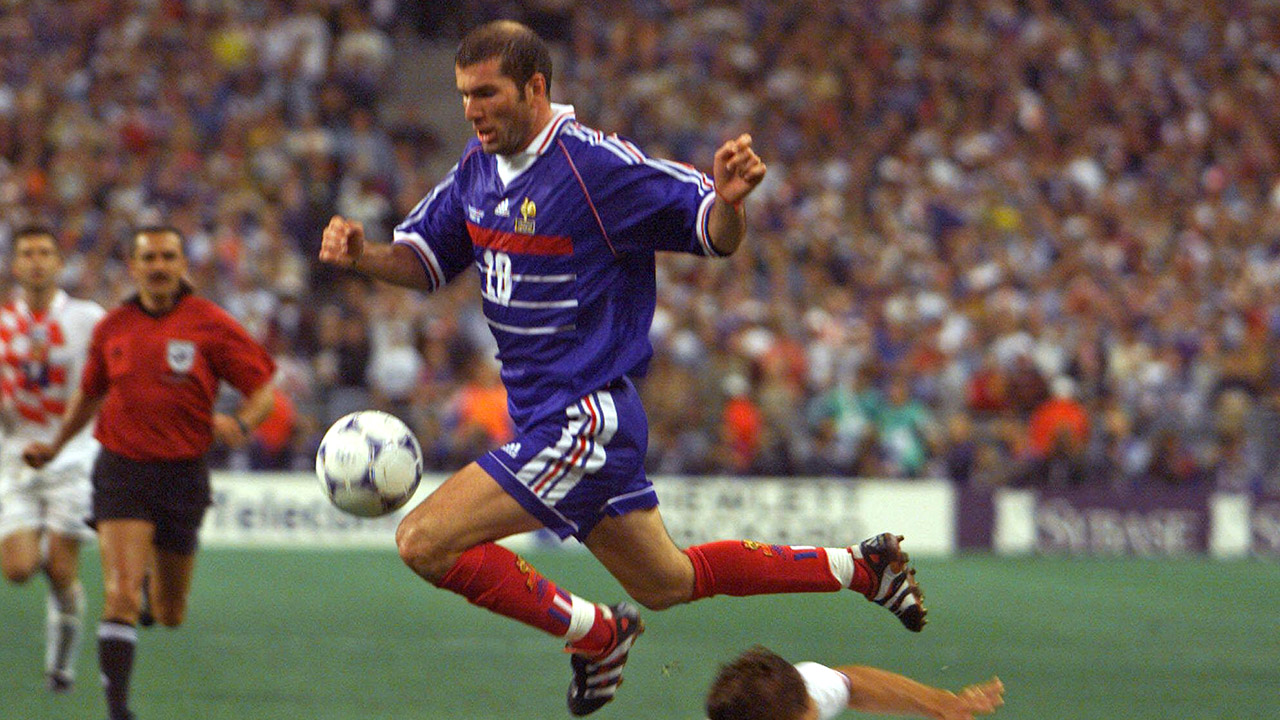
Over the ensuing decades, some of the biggest and most iconic names in the history of the sport would win the award, including Eusebio, George Best, Franz Beckenbauer, Michel Platini, Zinedine Zidane and Roberto Baggio.
The Ballon d’Or underwent the first in a series of major changes in 1995 when France Football changed the rules, opening up eligibility to any player from a European club, regardless of their nationality. That same year, AC Milan star George Weah of Liberia became the first non-European to win the award.
In 2007, France Football went one step further by opening it up to players from the rest of the world, regardless of nationality or their pro club. This change meant that the Ballon d’Or had effectively become the world player of the year award, despite still being a separate honour from FIFA’s world player award.
In 2010, after negotiations between FIFA and France Football, the award merged into one and became officially known as the FIFA Ballon d’Or.
“Football has become universal, so it is a good thing to present just one prize to the world’s best player. With this agreement, football is the real winner,” FIFA president Sepp Blatter said when the formal announcement was made.
The agreement with FIFA ended after five years, and France Footbal has exclusively handed out the Ballon d’Or since 2016.
This year marks another new era for the Ballon d’Or, as France Football will hand out the inaugural women’s Ballon d’Or award during Monday’s ceremony in Paris.
Voting for the Ballon d’Or award is conducted by an international panel of soccer journalists, who will select winners from a short list of 30 male and 15 female candidates. Canada’s Christine Sinclair is among the nominees up for the women’s Ballon d’Or. To see the full list of candidates for both awards, CLICK HERE.
Looking back, it’s interesting to note some of the statistical anomalies, most notably that only one goalkeeper has ever claimed the Ballon d’Or: the USSR’s Lev Yashin, in 1963.
The year 1972 marked the first time that one country, West Germany, produced the top three finishers in voting for the award: Franz Beckenbauer, Gerd Müller and Günter Netzer. The West Germans did it again in 1981, this time with Karl-Heinz Rummenigge, Paul Breitner and Bernd Schuster.
In 1988, AC Milan and Netherlands teammates Marco van Basten, Ruud Gullit and Frank Rijkaard finished in the top three.
Since 2008, Lionel Messi and Cristiano Ronaldo have each won the Ballon d’Or five times. Even when one of the two didn’t claim the award during that period, the other finished second in the voting nine times out of 10 – the lone exception came in 2010 when Andres Iniesta was the runner-up. Former Brazilian star Kaka was the last person other than Messi or Ronaldo to win the honour, in 2007.
From 1982 to 1992, Italian clubs produced the Ballon d’Or winner 13 out of 17 times.
[relatedlinks]