RIGHT AT HOME
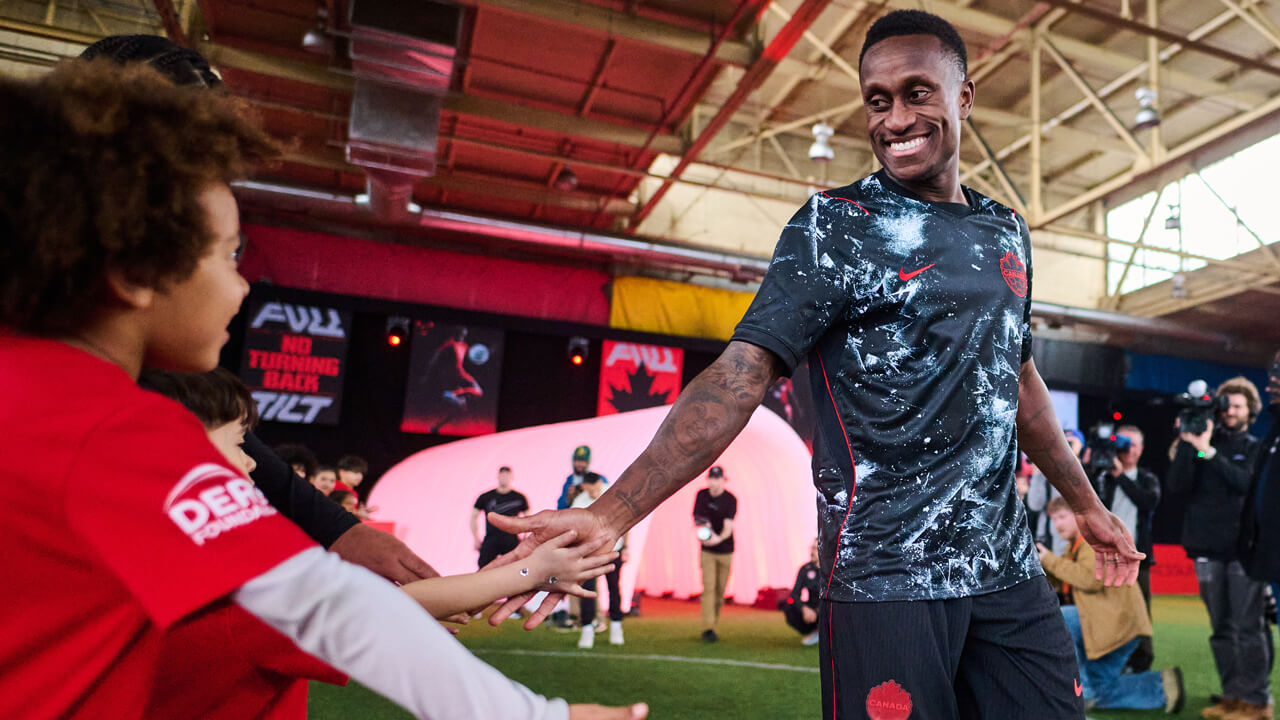
R ichie Laryea is perched in the perfect spot to reminisce. Now admittedly, the Toronto FC fullback isn’t about to reach for one of the adult beverages housed in a small refrigerator nearby; it seems safe to say elite athletes preparing for the biggest moment of their lives rarely indulge in a mid-day libation. But the fact remains Laryea is seated on one of three black, high-top chairs pulled up to a small bar, a traditional backdrop for a round of “remember when?”
This scaled-down watering hole is tucked into a back corner of the press conference room at TFC’s training ground in North York, Ont., making it even more suitable for a trip down Laryea Memory Lane, because this is the part of Toronto he grew up in. From where he’s sitting, Laryea can turn his fit frame and point to the precise spot where an important anecdote from his adolescence occurred: When he was about 12, Richie made the short walk — along with his dad, Robert, and younger brother, Reggie — from his family’s apartment to the field where Tottenham Hotspur, visiting North America from the English Premier League, were training. The movements. The focus. The finishes. It all hit Laryea like a ball to the chest. “That moment for my brother and I was kind of like, ‘We need to do everything we can to get to that level,’” he says. “Not knowing if we could or not, but that was inspirational, motivational, watching them train.”
Laryea is certainly not the first person who saw the sport he loved played at the highest level and decided he wanted in. The difference, though, between the 31-year-old Canadian and an ocean of other athletes out there is his willingness to battle for every foot of turf. The result of Laryea’s talent and effort is a truly unique chance to suit up for the national team in a home-soil World Cup, playing at the BMO Field stadium that houses his club squad. It’s an opportunity Laryea doesn’t take for granted and refuses to squander.
Four years ago, there was a happy-to-be-here feel around the Canadian side that unexpectedly qualified for the World Cup. This time out — even with some black clouds in the form of injury concerns — Laryea and his teammates are on the front foot, ready to battle. And if there’s one Rouge ready to tackle all comers, regardless of their reputation, it’s the five-foot-nine, 150-pound guy who grew up playing no other way.
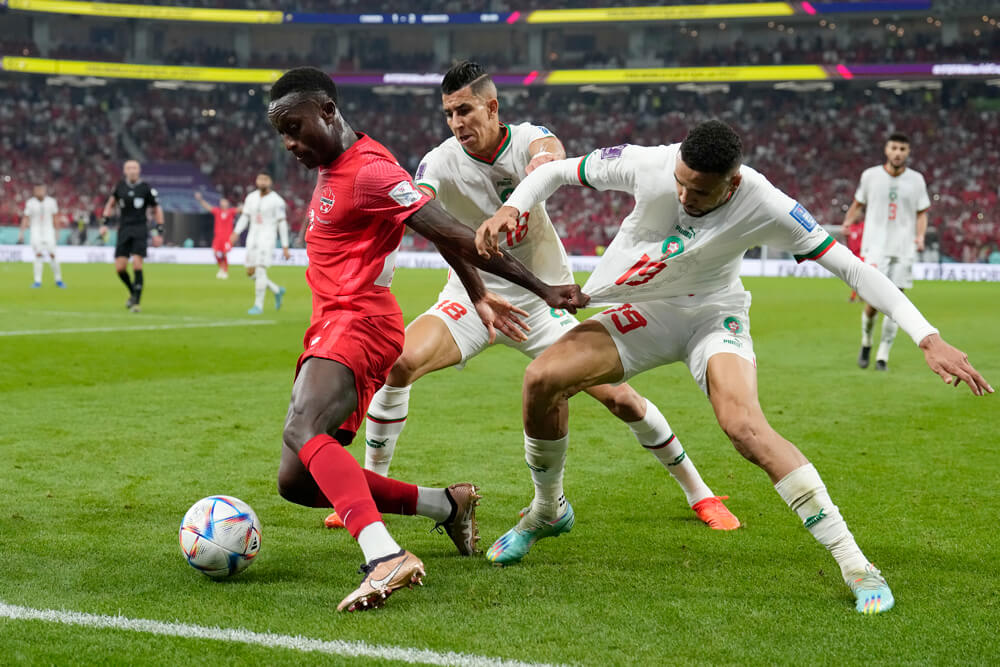
J ason Hernandez was coming to the end of his playing days when Richie Laryea entered the Major League Soccer ranks. Happily for Hernandez, though, he did have a coming together with Laryea that was captured and preserved. “I have a funny photo of me kicking him or sending him to the turf,” says Toronto FC’s general manager, himself a hard-nosed player in his day. “I point to that on occasion when I pass him in the hallway.”
That collision with his future GM occurred when Laryea was young midfielder struggling to find his way with the Orlando City squad that selected him seventh overall in the 2016 Major League Soccer SuperDraft. Prior to Orlando, things had gone well for Laryea as he climbed the ranks. Even as a small kid, often playing against competition two and three years his senior — and numerous inches taller — Laryea had always excelled. “You could just tell he was special and had it in him to go all the way,” says Reggie Laryea, who is three years younger than his brother.
The pro ranks are a different ball of wax, however. Laryea acknowledges his time in Orlando was a struggle, and by 2019 he was over the moon to join his hometown squad on a trial. “It was a breath of fresh air,” Laryea says. “I was [in Orlando] for three years and my time [there], honestly, wasn’t great, just in terms of playing time. Overall experience, I learned a lot, but they weren’t pleasant memories on the field.”
Excited as Laryea was to get an opportunity with TFC — a team he’d gone to watch at BMO Field after his own seasons ended in 2016 and ’17, when the Reds made consecutive runs to the MLS Cup Final — his star had faded from his days as Orlando’s first-round pick.
“For whatever reason at Orlando, it was challenging and he probably didn’t see the opportunities he felt he deserved and obviously parted ways with the club,” says Hernandez, who had just joined TFC’s front office as manager of player engagement when Laryea arrived. “Really, he had to build himself up again from the ground up and take opportunities and show, time and time again, that he could deliver.”
Part of re-establishing his value was moving from the midfield — where he’d basically played his entire life — to right back. Learning a new position on the fly as a professional is a tall order, but the task ultimately served to strengthen Laryea’s already-sturdy spine. “I think that set of [challenging] circumstances for certain folks who are wired a specific kind of way actually creates a bit of a monster, someone who plays every match like it’s his last,” says Hernandez. “Richie approaches the game like it could be his last day and it’s allowed him to reach certain heights maybe he even thought, at certain moments and times, would have been a stretch.”
In the 2020 campaign with TFC, Laryea scored an impressive four goals from the back end in 20 matches. In 2022, he got a five-game look with Nottingham Forest in England, while establishing himself as a fixture on the national team that delighted Canadian soccer fans by qualifying for the 2022 World Cup after a 36-year absence from the tournament. Laryea says the lads landed in Qatar believing they could hold their own, but he acknowledges there was a playing-with-house-money dynamic to it all. That won’t be the case with Canada now co-hosting the event and slotted in a group with beatable nations Bosnia and Herzegovina and Qatar, along with a stronger Swiss side. It’s certainly a different level of competition than Canada ran into last time, when it was placed in a group of death.
“We still wanted to compete; we still wanted to get our first win, our first goal, all these things in a World Cup,” says Laryea, whose squad was lumped in with Belgium, Croatia and Morocco in 2022. “But it felt like, overall, we were just happy to participate there versus now this go around with it being here, with the team we have, with the coach [Jesse Marsch] we have, with the standards we have, it’s like a new belief within the group. We’re not talking about first goal, first win now; we’re here to compete. It’s a tournament on our home soil, we’re playing three games guaranteed on home soil. We need to make them count. These are games we’re looking to win.”
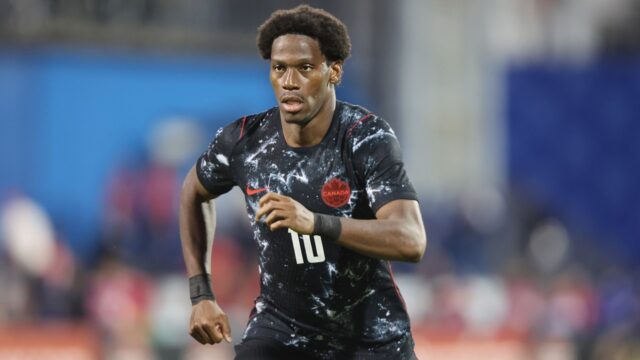
There’s no doubt, when it comes to making victories happen — beginning with Friday afternoon’s match versus Bosnia and Herzegovina at BMO — a few Canadian names are more prominent than Laryea’s. Everyone is hoping to see injured captain Alphonso Davies in the tournament at some point; midfielder Ismaël Koné is a special young talent; all-time leading goal-getter Jonathan David will have to show some finish; and keeper Maxime Crépeau will be counted on to save Canada’s bacon a few times. But Laryea’s value far exceeds that of a try-hard simply there to bring energy to the pitch. He’s a direct, intelligent player whose positional diversity is a unique boon for Marsch. “We’ve seen him feature really prominently for the national team at left back [in addition to his natural right side] over this last stretch under Jesse [and] there aren’t a ton of fullbacks on the international scene who can give you international-level output at both [left and right] fullback,” Hernandez says. “His skillset really is one that’s quite versatile. Whether it’s out in wider areas, defensively in lower [tighter] areas and even in the middle at different points, he has a variety of characteristics that speak to different coaches.”
While Canada does have a new voice guiding the squad — Marsch replaced John Herdman two years ago, following the latter’s entanglement in a messy drone-spying scandal — one thing that hasn’t changed about the side that qualified for Qatar is an us-against-the-world mentality.
“Being from Canada, it’s hard,” says Reggie Laryea, who played college soccer in both Canada and the U.S. and currently serves as an instructor at the soccer academy AKZ Canada in Mississauga, Ont. “No one ever believes people from Canada can play soccer. When you’re in the States or over in Europe, [people don’t always] believe in you. So, you have to believe in yourself. That’s what a lot of them have on that national team, is they really believe in their capabilities.”
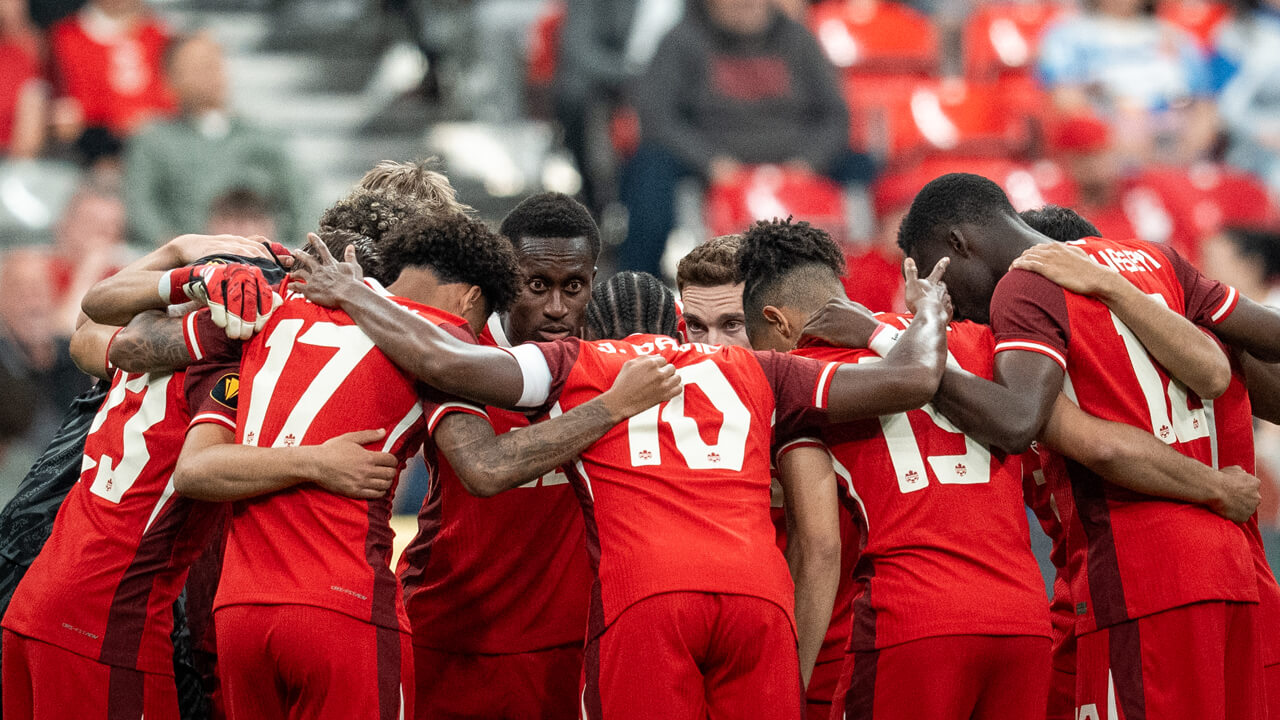
When it comes to Canadian bonds, there’s another dynamic carried over from the group that captured hearts and minds with its unlikely rise four years ago. The word “brotherhood” probably gets thrown around too freely inside sports locker rooms. However, when it surfaces with this club — as it inevitably will — it’s an appropriate term to describe how a bunch of teammates feel about each other, based on both their incredible soccer achievements together and a shared experience growing up, when nothing was promised. “The grit and determination, fighting for everything you have, that kind of came [from] my dad, who immigrated to Canada [from Ghana] with my mom and my [older] sister,” Laryea says. “That’s what makes this country beautiful, it’s given a lot of people opportunities to change their lives. Every single person on the national team, they have a story like that.”
Laryea was witness to tenacious people all around his neighbourhood, including at a Spanish soccer club where he played some of his first organized matches. “We were seven years old and [the coach is] telling us, ‘It’s time to work,’” he recalls. “It was, quite honestly, intimidating when I first met him, but then I [found it] coincided perfectly with how I view my dad and what he’s done for our family. I kind of adopted this feeling of it being doing or die whenever I play or train. Even though I know it’s not, [I fight like it is].”
Ask the right Laryea and you’ll get a clear sense of how contagious that spirit is, and how it imbues Canada with the moxie necessary to take on any opponent.
“He probably won’t say this,” Reggie says of his brother, “[but] I feel [he’s a big reason] why the Canadian team is very connected. I see when he’s on the field the type of energy he brings. He’s willing [to go to bat] for his brothers on the field, he starts riling up the opponents. Canada used to never be like that; we [were] very nice on the field and my brother, he just brings that extra heat when he plays. I see a lot of the [other] boys doing that [now].”
While Laryea would never identify himself as the fountainhead, he certainly feels the team’s cohesive conviction and believes in its force. Even with a wind at its back — competing at home, potentially fielding its most talented squad ever — Canada can use all the help it can get against the titans of world football. That’s where playing for each other — the team’s “superpower” according to Laryea — can be a differentiator.
“If someone is going through a very good period, everyone reaches out; if someone is going through a bad period, everyone reaches out,” he says of the squad’s dynamic when players are spread around the globe playing club soccer. “It’s a very big, connected team. It’s amazing. It’s the best group of guys I’ve ever played with in my career. There’s no jealousy, everyone is pushing in the exact same direction.
“Sometimes you might feel like you’re getting the short end of the stick, [but] it gets brushed aside quickly and we’re back to supporting the group because we love each other, we love this country and we want what’s best for this country.”
The excitement for this team and event has obviously spilled over the sidelines and touched every aspect of Laryea’s life. He chuckles while sitting on that black high-top in mid-May talking about how, in the weeks and months leading up to the tournament, people stopped saying “Hello” when they saw him out for coffee and skipped right to, “Are you excited for the World Cup?” Even if tempered by his one-day-at-a-time approach, the answer is an undeniable “Yes.” And if there’s a cherry on top of it all for Laryea, it’s that he gets to do this with a brother among brothers, TFC captain and Canadian midfielder Jonathan Osorio.
“Not to overstate it, but this is legendary-type stuff,” Hernandez says of Laryea and Osorio, who also grew up in the Greater Toronto Area. “The idea you could feature for your hometown club, also feature for you national team and play in a home World Cup in your city? That formula doesn’t come around too often — if ever.”
If Laryea was already playing like every match was his last, imagine how he’ll approach these ones.