
It’s fair to say that there was a reshuffling of the deck by the Vancouver Whitecaps this off-season.
The West Coast club retooled after a disappointing playoff exit at the hands of the Seattle Sounders in November that underlined a malaise within the franchise. A handful of new faces dot the roster ahead of the start of the 2018 Major League Soccer campaign, which for Vancouver begins on Sunday at home against the Montreal Impact.
The Whitecaps were busy making a number of moves over the winter, including earlier this week when they traded standout defensive midfielder Tony Tchani to the Chicago Fire for Targeted Allocation Money. On Friday, they traded defender Tim Parker to the New York Red Bulls for Brazilian midfielder Felipe. A number of other key players are gone, including top scorer Fredy Montero, goalkeeper David Ousted, and midfielders Matias Laba and Christian Bolanos.
Vancouver also lost defenders Jordan Harvey (signed with LAFC as a free agent) and Sam Adekugbe (signed with Norwegian club Valeranga), and midfielders Andrew Jacobson (retired) and Nosa Igiebor (option not picked up).
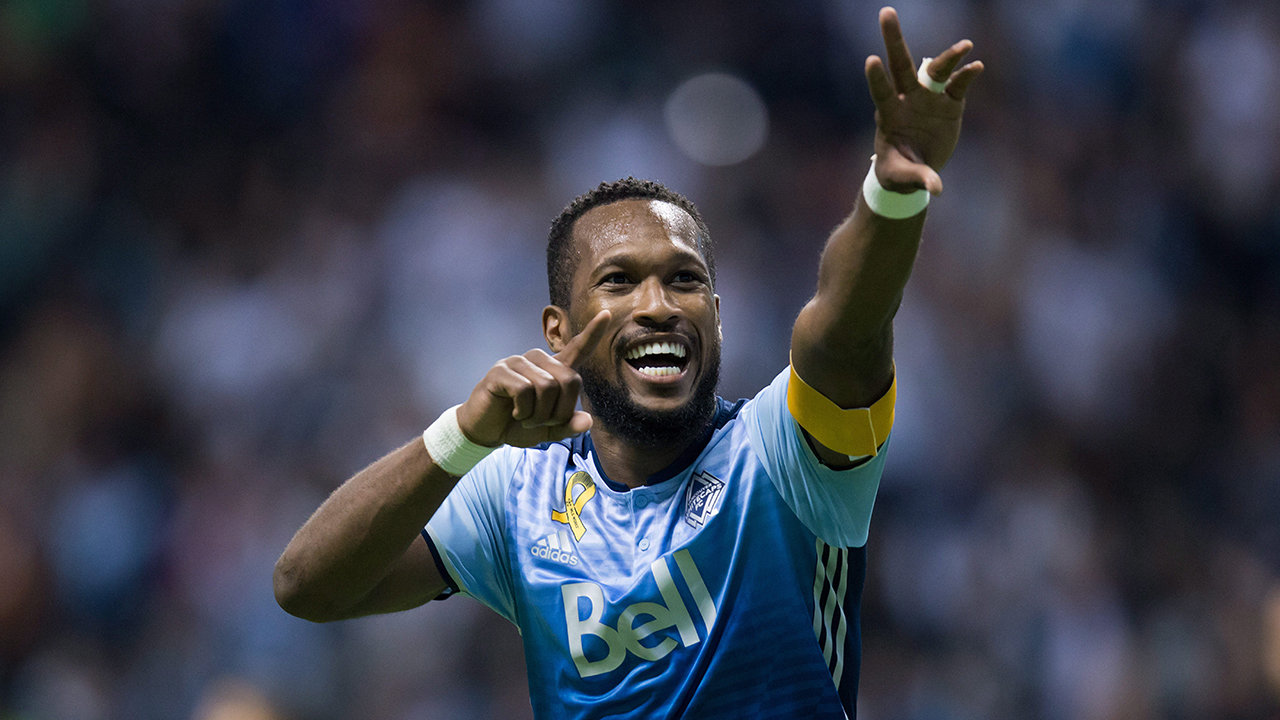
By Sportsnet’s count, there have been 17 departures in total. A host of newcomers have arrived in their place, most notably star goal-scorer Kei Kamara, Venezuelan forward Anthony Blondell, Canadian Doneil Henry, defenders Sean Franklin and Jose Aja, Mexican Efraín Juárez, and English midfielder Jordon Mutch (on loan from Crystal Palace).
Yet for all of the turnover, for all of the tinkering, for all of the changes, as an outsider looking in, you can’t help but feel blasé by this “new-look” Whitecaps side, and that management mostly made a series of lateral moves that don’t improve the team in a significant way (Felipe makes them better, it has to be said).
Kamara has 83 goals in MLS since 2010, including 22 during the 2015 season when he was a finalist for the league MVP award. Kamara is a proven goal-scorer in MLS, and he could prove to be an upgrade on Montero. The big question, though, is what kind of support he can expect from Blondell, a youngster who is an unproven commodity, despite scoring with regularity for Venezuelan club Monagas last season. And is it reasonable to expect much production from fellow forwards Bernie Ibini, Myer Bevan or Erik Hurtado?
Attacking midfielders Cristian Techera, Yordy Reyna, Nicolas Mezquida and Brek Shea – who combined for 21 goals in 2017 – will have to produce again this year in order to lessen the burden resting on Kamara’s shoulders.
The Whitecaps are not a possession team; they enjoyed a league-low 39 per cent possession rate last year. That means a lot of pressure is put on the defence, and the central pairing in midfield. With Laba and Tchani gone, Aly Ghazal will have a new partner – coach Carl Robinson recently hinted that the play of Canadian Russell Teibert during the pre-season made him comfortable enough to trade Tchani.
What Vancouver was missing was a playmaking midfielder – an orchestrator who can open up the game by distributing the ball to teammates in dangerous scoring positions. In trading for Felipe, the Whitecaps have added a class player who will bring great athleticism to the midfield, and help them hold onto the ball.
The Parker-Kendall Waston duo was one of the best central defensive pairings in MLS last season, so either Aja or Henry will have big shoes to fill in the middle of a back line that has quite a bit of depth. Fullbacks Marcel de Jong and Jake Nerwinski are coming off solid debut seasons for the Whitecaps, and more should be expected of them in 2018.
Ousted’s exit was foretold in the second half of last season when Stefan Marinovic took over as the new No. 1. Marinovic showed well during his time between the posts, but it’ll be interesting to see if he will be able to keep the Whitecaps in games and help them steal points like Ousted routinely did during his tenure in Vancouver.
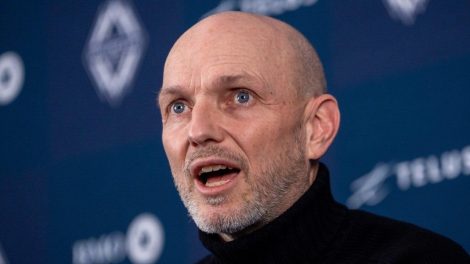
Notwithstanding who else besides Kamara will supply a steady stream of goals, the biggest question facing the Whitecaps this season surrounds the man in charge. Can coach Carl Robinson inject some new life into this team by being more aggressive in his approach?
Robinson led Vancouver to the Western Conference semifinals in two of the last three seasons. But it’s telling that in those four games, the Whitecaps failed to score a single goal – and in 180 minutes against Seattle in last year’s seminfinal series, they didn’t even register a single, dangerous shot on target.
Seattle was there for the taking in the first leg of last year’s playoff series, as they were missing influential forward Clint Dempsey through suspension, Vancouver was riding the momentum from its 5-0 thrashing of San Jose in the previous playoff round, and had a boisterous crowd at BC Place behind them. It was all set up for the ‘Caps to go for it.
But Robinson played it safe, and his team never attempted to open it up against the Sounders, playing not to lose instead of trying to win. The Welsh manager’s conservative tactics proved to be incredibly tone deaf, and he doubled down on that approach in the second leg in Seattle – although, to be fair, influential attackers Reyna and Techera weren’t at full strength and played with injuries.
Still, when the stakes have been at their highest, Robinson has cowered in terms of his tactics and player selection. A new philosophy has to be adopted. Complacency can no longer be accepted. They can’t be afraid of losing. They have to play without fear. Robinson must set the tone.
[relatedlinks]