After each matchday of the 2018 FIFA World Cup, Sportsnet.ca’s World Cup Daily blog will recap the day’s events, and look ahead to the next day’s slate of games.
Here’s what happened on Saturday, in case you missed it…
READ ALL ABOUT IT
France 2, Australia 1 in Kazan: Match report || match stats
Argentina 1, Iceland 1 in Moscow: Match report || match stats
Peru 0, Denmark 1 in Saransk: Match report || match stats
Croatia 2, Nigeria 0 in Kaliningrad: Match report || match stats
MAIN TALKING POINTS
A VAR-y good decision
History was made in Kazan where the first on-field video review in World Cup history took place. Uruguayan referee Andres Cunha originally waved off French penalty appeals after Australia’s Josh Risdon took down Antoine Griezmann from behind early in the second half. But Cunha decided to review the play after receiving a message in his ear piece from the Video Assistant Referee. After watching the replay on the sidelines, Cunha overturned his decision and pointed to the spot. Griezmann converted the penalty to give France the lead.
There was a lot of scepticism about VAR ahead of this tournament. There were fears it would lead to mass confusion and it would take too long to review contentious plays. In this case, Cunha clearly communicated to the players what he was doing, and everybody in the stadium understood that it was being reviewed. The first stoppage after the incident lasted around 20 seconds. Cunha then took about 45 seconds to look at the replay, so the total disruption in play was minimal and, critically, he made the right decision in the end.
Pundits and critics have been quick to slam VAR for its inefficiency at times – the system is used in MLS, Serie A, the Bundesliga. But it has to be said that this was a textbook example of how VAR should work. Credit must also be given to Cunha for spotting a handball by French defender Samuel Umtiti and awarding a penalty four minutes later without the use of VAR.
[relatedlinks]
Don’t blame Messi
The temptation is to look at Argentina’s failure to break down Iceland and lay all the blame at the feet of Lionel Messi. The FC Barcelona man couldn’t convert his penalty in the 64th minute – his fourth missed penalty in his last seven attempts for both club and country – and his free kick from 25 yards out in the dying minutes failed to clear the Icelandic defensive wall.
But Argentina’s 1-1 draw against Iceland was hardly Messi’s fault. He attempted 11 shots on goal, and largely carried the bulk of his team’s attacking burden. Questions, no doubt, will be asked of Messi, but they should be put to Jorge Sampaoli, instead.
Why the Argentine manager felt compelled to deploy two holding midfielders in Lucas Biglia and Javier Mascherano was a mystery, especially against a bunkering team such as Iceland. It was tactically redundant, to say the least. Biglia and Mascherano were too measured and laboured in moving the ball forward, and Argentina looked too slow in transition and in their counterattacks as a result. Maximiliano Meza showed brief flashes of attacking life, but surely Sampaoli should have brought on the dynamic Paulo Dybala at some point, instead of letting him sit on the bench all game.
https://twitter.com/JohnMolinaro/status/1008001174417502208
Peru entertains, but can’t win
Peru returned to the World Cup stage for the first time in 36 years, and it proved to be well worth the wait, as they charmed the crowd in Saransk with their dynamic and fast-paced brand of soccer. It can be a cruel sport at times, though. We were reminded of this on Saturday.
Peru outplayed Denmark in this contest, and showed far greater attacking intent than their European counterparts. But for all of their breathless play, the South Americans couldn’t find a way through the determined Danes, who did a masterful job of game management. It also helped the Danish cause that Kasper Schmeichel was on top of his game, making a number of crucial saves, including a pair of big stops on Jefferson Farfán in the second half when the Peruvians were swarming.
Peru was criminally wasteful, at times trying to walk the ball into the net, and were guilty of overly intricate play. You also can’t help but wonder if the game would have turned out differently had Christian Cueva converted from the penalty spot just before halftime, instead of ballooning his attempt over the crossbar. To Cueva’s credit, he responded with plenty of character in the second half, proving a key reference point for Peru’s attack, alongside veteran striker Paolo Guerrero, who was introduced in the 62nd minute, and nearly pulled off a cheeky back-heeled goal that whispered past the post.
Croatia comfortably win
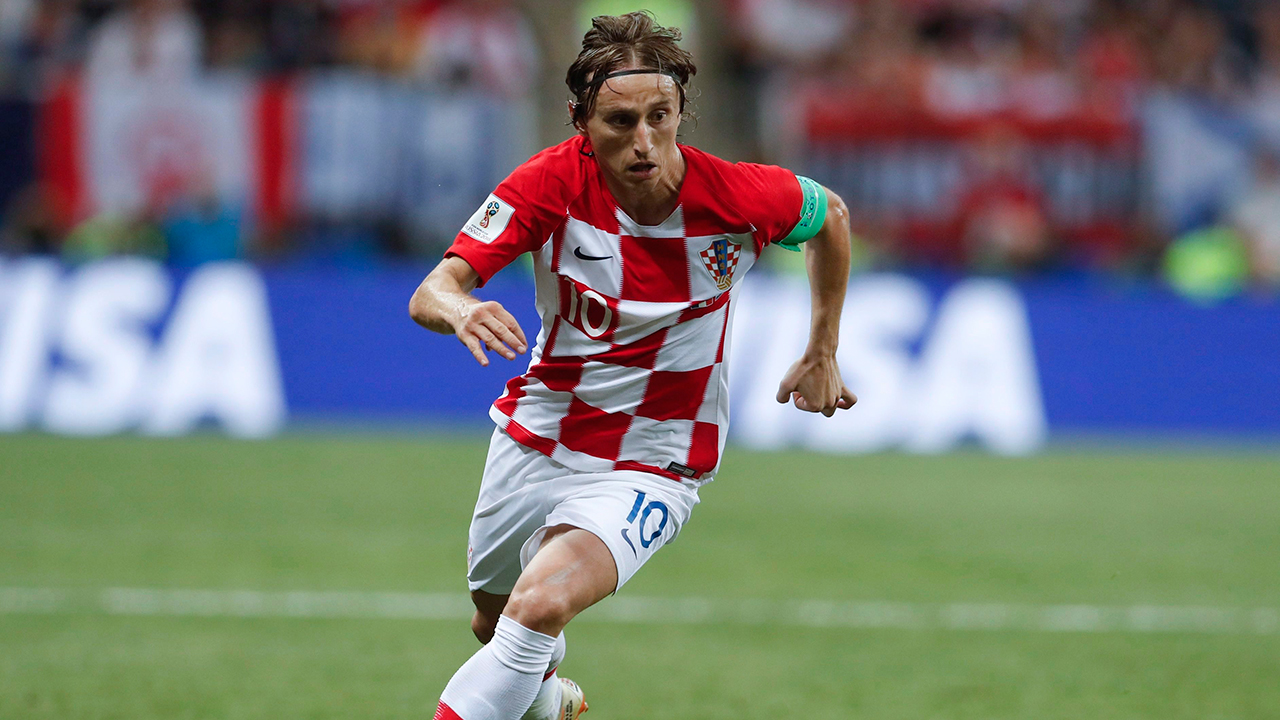
When reading the match stats, this contest looked a lot closer than it was in reality. Both sides only managed two shots on target, and it wasn’t until the 60th minute that the first attempt on net was recorded via Odion Ighalo’s tame header that Croatia goalkeeper Danijel Subasic collected with ease. And there was a bit of good fortune to both of Croatia’s goals: one an own-goal, and the second from the penalty spot that was converted by Luka Modric.
But Croatia bossed this one, comfortably controlling the contest with their possession game, and forcing the Nigerians to chase shadows. For all their hard work, the Super Eagles never tested Subasic, while Modric effectively pulled the creative strings and forward Mario Mandzukic put in an industrial shift for the Croatians up top.
Tournament management is an important part of World Cup play, a fact not lost on Croatia, who earned a win in its first opening World Cup match since 1998 in France. Croatia did what they had to do to turn back the challenge of Nigeria, pacing and saving themselves for the bigger challenges ahead in this group, namely Argentina.
[snippet id=3758859]
BEST GAME
Although short on goals, the Peru-Denmark contest in Saransk featured some end-to-end stuff, and was played at a quick pace before a boisterous and appreciative crowd.
BEST GOAL
In the 19th minute, Sergio Aguero corralled teammate Marcos Rojo’s attempt on goal, controlling it on the turn as he thumped a left-footed shot into the top corner.
BEST SAVE
In the 17th minute, Australia’s Aaron Mooy delivered a free kick from the left wing into the box that deflected off teammate Trent Sainsbury. French goalkeeper Hugo Lloris reacted just in time by making a diving save to tip the ball around the post.
BEST MOMENT
The ball boy for the Argentina-Iceland match who stuck around for the pre-game coin toss – despite being told by the referee to leave the field – so that he could shake hands with Lionel Messi. Well done, son!
THE GAME WITHIN THE GAME
Iceland reminds us that possession isn’t everything. It’s great if a team can dictate the pace of the game, but it’s just as important what you do with the ball.
BEST TWEET
If you can't laugh at yourself, who can you laugh at?@samumtiti #FRA pic.twitter.com/LpEzol0OEI
— Dugout (@Dugout) June 16, 2018
BEST QUOTE
“Ice cold! Ice cool! Iceland!” – World Cup TV commentator Peter Drury after Alfred Finnbogason’s equalizing goal against Argentina.
SIX PACK OF STATS
• At 19 years and 16 months, Kylian Mbappe is the youngest French player to play in a World Cup match.
• France has won its opening game in two consecutive World Cups for the first time in its history (vs. Honduras in 2014, vs. Australia in 2018).
• Lionel Messi and Javier Mascherano on Saturday joined Diego Maradona as the only players for Argentina to appear in four World Cups.
• Argentina’s Lionel Messi attempted 11 shots versus Iceland, the most he’s ever attempted in a World Cup game.
• Christian Eriksen’s assist on Saturday was his 17th goal (12) or assist (fifth) in his last 14 games for Denmark.
• There were five penalties awarded on Saturday, the most in one day at the World Cup since 1998.
Stats courtesy of Opta
THREE STARS
1) Hannes Halldorsson, Iceland: The Icelandic goalkeeper was kept busy, forced to make seven saves. He denied Lionel Messi from the penalty spot, and then made a great left-handed stop in the 87th minute to rob Cristian Pavon of a sure winner.
2) N’Golo Kante, France: An unsung hero for France, the Chelsea man was a bulwark in the French midfield making a number of clearances, interceptions and tackles. He also completed 58 passes, for a success rate of 95 per cent.
3) Kasper Schmeichel, Denmark: The Leicester City goalkeeper was one of the reasons Peru didn’t run away with this one. He ended up making six saves as Peru’s attack swarmed, and he was perfectly positioned throughout the contest.
LOOKING AHEAD TO SUNDAY
Group E: Costa Rica vs. Serbia (8:00 a.m. ET) – If you haven’t seen Sergej Milinkovic-Savic play before, you’re in for a real treat. The 23-year-old Serb is coming off a great season with Lazio, and could be one of the World Cup’s breakout stars.
Group F: Germany vs. Mexico (11:00 a.m. ET) – The reigning World Cup champions make their first appearance of the tournament in Moscow against a Mexican side it thrashed 4-1 at last year’s FIFA Confederations Cup semifinals.
Group E: Brazil vs. Switzerland (2:00 p.m. ET) – Four years after that humiliating 7-1 loss to Germany (and a 3-0 humbling at the hands of the Netherlands in the third-place game), Brazil begins its path towards World Cup redemption with a tricky test against the Swiss.
ELSEWHERE ON THE WEB
Sports Illustrated’s Grant Wahl sat down for an interview with Joshua Kimmich, who is being touted as the next great German defender:
“Joshua Kimmich, Germany’s 23-year-old emerging star, may be the best right back at the World Cup. So fast has he risen over the past three years, in fact, that nobody bemoans the departure of the great Philipp Lahm from the defending World Cup champion, which is saying something.”
The New Yorker’s Brian Phillips writes about that amazing goal by Spain’s Nacho on Friday:
“Nuance always finds a way back into the picture, especially in soccer: Nacho, who’d earlier taken the blame for Portugal’s first goal by fouling Ronaldo in the area, seemed afterward to have won the match, lost the match, and drawn the match, all at the same time. But when I remember this match, I think I’ll remember Nacho’s goal, along with Ronaldo’s hat trick: the giddy moment of happy lucidity within soccer’s endless doubt.”
Unibet’s Adam Hurrey remembers 1990 World Cup icon Roger Milla of Cameroon:
“It is one of the World Cup’s greatest stories. Man goes into semi-retirement on a volcanic island 1,300 miles off the east coast of Africa. Man comes out of semi-retirement on the whim of his country’s president and scores four goals at Italia ‘90. Man wiggles his hips by the corner flag. World swoons. Man is thirty-eight years old.”