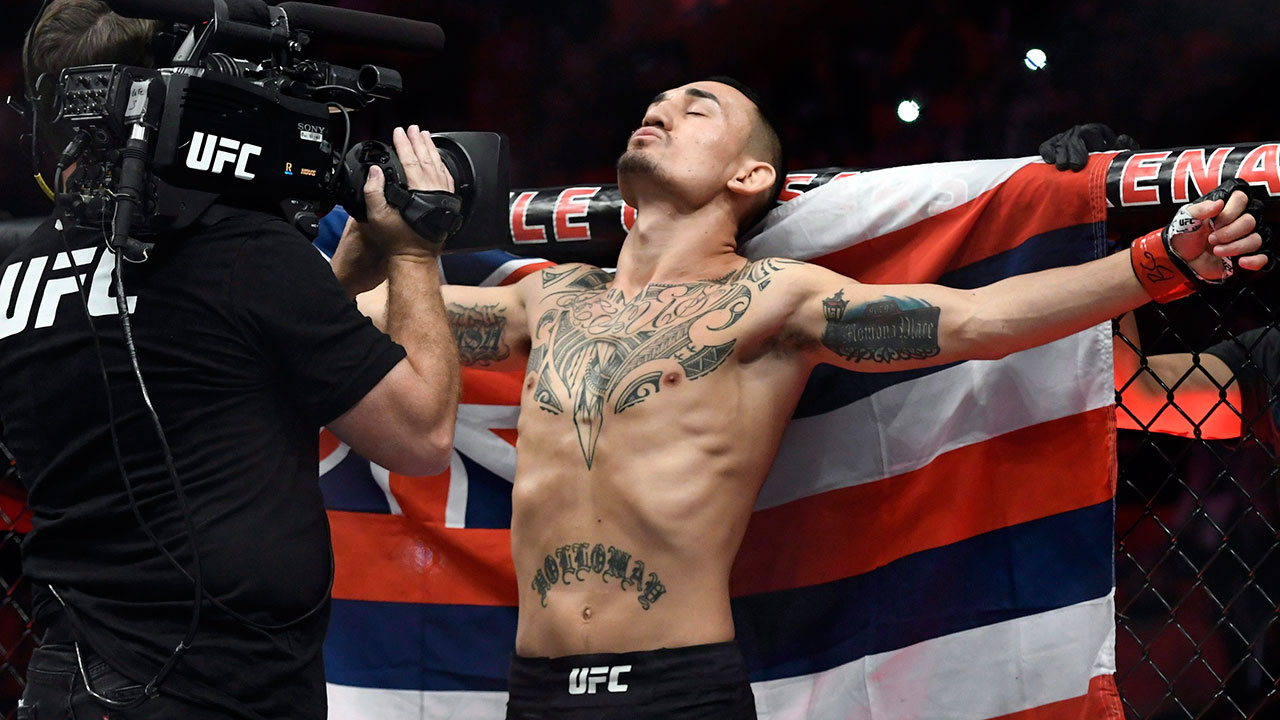
When Max Holloway and Dustin Poirier square off for the third and final time this weekend, it will be a battle between two athletes with perhaps the most difficult strength of schedule in mixed martial arts history.
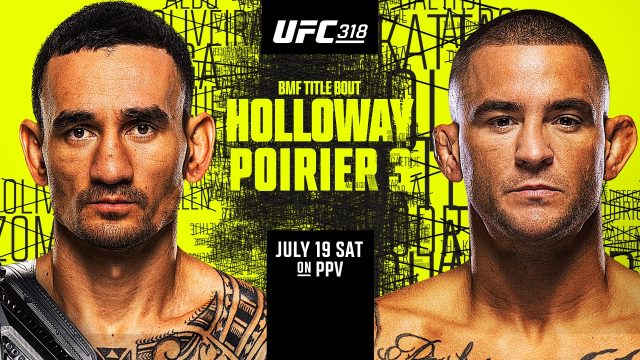
Holloway defends the BMF Title against Poirier to complete their trilogy in the main event of UFC 318 on Saturday in New Orleans.
Watch UFC 318 on Sportsnet+
Dustin Poirier will compete in his farewell fight against old rival Max Holloway for the BMF Title. Watch UFC 318 on Saturday, July 19 with prelim coverage beginning 8 p.m. ET / 5 p.m. PT, and pay-per-view main card starting at 10 p.m. ET / 7 p.m. PT.
Purchase the event
They have near identical UFC records – Holloway is 22-8 while Poirier is 22-8 with one no-contest – and are two of the most respected fighters in the sport.
Between the two, they have faced a combined fifteen different current or former champions (including interim) and that includes a handful of mutual opponents as you will see below.
In the past 10 years, Poirier has faced only one unranked opponent (Joe Duffy at the start of 2016), while Holloway has faced exclusively opponents ranked in the top 10.
To determine who had the more difficult strength of schedule, this article will examine each opponent from the start of their UFC careers to the present, assigning a subjective numeric grade out of 10 that rates how difficult each opponent was at the time of the contest and produce an average.
Some of the opponents are referenced multiple times and their rating indicates where they were in their career at that time and weighs an assortment of circumstances going into that particular fight, including the betting odds and how the fighter had performed in recent bouts leading up to their matchup with Holloway or Poirier.
Whether either fighter won those contests will not be considered, as the result is not relevant to the strength of schedule.
THE EARLY YEARS
Dustin Poirier:
Josh Grispi (8.5)
Jason Young (5.5)
Pablo Garza (6.2)
Max Holloway (6.8)
“The Korean Zombie” Chan Sung Jung (8.8)
Analysis: If you were not following the sport at the time, you may not be familiar with Grispi, who was considered the “next big thing” at featherweight at the time and was lined up to face Jose Aldo for the title. Aldo got injured and Grispi decided to take a risk and face Poirier, who defeated him and he would subsequently lose his next three, get into trouble with the law and never fight again. The win was arguably what put Poirier on the map.
From there, he would win his next three against Young, Garza and a 20-year-old Holloway, who was making his UFC debut. Young was a British prospect who was making his UFC debut and did not do much in the promotion, Garza was a rangy submission specialist who Poirier was expected to beat and, of course, Holloway was a young upstart who took the fight on short notice and made a great account of himself before getting submitted by Poirier. He then ran into a surging Korean Zombie, who was coming off a seven-second knockout of former title challenger Mark Hominick.
Max Holloway:
Dustin Poirier (9.1)
Pat Schilling (2.1)
Justin Lawrence (6.5)
Leonard Garcia (6.2)
Dennis Bermudez (8.1)
Analysis: Holloway’s debut against Poirier was a tall order on short notice, but from there, he defeated Schilling, who arguably did not belong in the UFC, Lawrence, who was a tricky karate-based fighter who looked good on The Ultimate Fighter, and the always gritty Leonard Garcia. Those wins earned him a step up in competition against a streaking Bermudez and Holloway gave him all that he could handle in a split decision loss.
THE ESTABLISHING YEARS
Poirier:
Jonathan Brookins (3.5)
Cub Swanson (8.3)
Erik Koch (7.7)
Diego Brandao (6.9)
Akira Corassani (2.0)
Analysis: After a good run on The Ultimate Fighter where he made it to the finals, Brookins had a tough run with losses to Erik Koch, Charles Oliveira and Poirier, which would be his last UFC appearance. Swanson was surging at that time and was able to defeat Poirier and the competition didn’t get much easier when he was matched up with Koch, who was considered a future star at the time. Poirier passed that test before getting lesser opponents in Brandao and Corassani.
Holloway:
Conor McGregor (8.7)
Will Chope (5.2)
Andre Fili (7.9)
Clay Collard (5.1)
Akira Corassani (2.6)
Analysis: Holloway ran into McGregor and, in an interesting turn of events, McGregor utilized his wrestling to take Holloway down four times, the only registered takedowns in his UFC career. McGregor would never lose a UFC fight at featherweight, his optimal division. From there, Holloway faced a huge featherweight in Chope, who stood 6-foot-4, which started what would become a run of 14 straight wins at featherweight. The next three wins were Fili, Collard and Corassani, with Fili being considered a top prospect at the time.
THE FORMATIVE YEARS
Poirier:
Conor McGregor (8.9)
Diego Ferreira (7.2)
Joe Duffy (7.6)
Bobby “King” Green (7.8)
Michael Johnson (7.9)
Analysis: This period marked Poirier’s transition from featherweight to lightweight and set the tone for the rest of his career. Poirier got McGregor as McGregor entered the peak of his powers and it marked the first time that Poirier was stopped by strikes. Poirier has since discussed how diminished he was by the weight cut to featherweight and vowed to never fight at that weight again. His move to lightweight was greeted with a higher quality of opponent and he passed the first three tests before getting stopped by Johnson, which was his last loss at lightweight before making a title run,
Holloway:
Cole Miller (3.9)
Cub Swanson (8.2)
Charles Oliveira (7.8)
Jeremy Stephens (7.5)
Ricardo Lamas (7.8)
Anthony Pettis (7.9)
Analysis: Holloway continued his win streak, which included a statement win over Swanson and a strange win over Oliveira, where Oliveira suffered a freak injury. The win streak eventually earned Holloway an interim featherweight championship opportunity against Pettis, a former lightweight champ who made a short-lived featherweight run in hopes of winning a title in a second division. With an interim championship, Holloway earned the opportunity to face the legendary Jose Aldo for the undisputed championship.
THE GLORY YEARS
Poirier:
Jim Miller (7.2)
Eddie Alvarez (8.4)*
Anthony Pettis (7.5)
Justin Gaethje (8.8)
Max Holloway (9.1)
Analysis: This was the run for Poirier that launched him into folk hero status with wins over savvy veterans in Miller and Pettis and blood-and-guts affairs against Alvarez and Gaethje that propelled him to an interim lightweight championship win in a rematch with Holloway, who was the reigning featherweight champion at the time.
*Poirier faced Alvarez twice during this run, however, the first bout resulted in a no-contest due to an unintentional illegal knee
Holloway:
Jose Aldo (9.3)
Jose Aldo (8.9)
Brian Ortega (8.6)
Dustin Poirier (9.4)
Frankie Edgar (7.8)
Analysis: This was Holloway at the peak of his powers with back-to-back wins against Aldo, an absolute obliteration of Ortega, a war with Poirier, where he fell just short of achieving champ-champ status and a successful return to featherweight with a win over another legend in Edgar.
PEAKS AND VALLEYS
Poirier:
Khabib Nurmagomedov (10.0)
Dan Hooker (8.3)
Conor McGregor (8.8)
Conor McGregor (8.1)
Charles Oliveira (9.1)
Michael Chandler (8.3)
Justin Gaethje (9.1)
Benoit Saint Denis (8.3)
Islam Makhachev (9.9)
Analysis: The strength of schedule ramps up here with Poirier tasked with facing Nurmagomedov, who was an immovable force, followed by an underrated war with Hooker. From there, he avenged his previous loss to McGregor with back-to-back wins, the first of which he was considered a sizeable underdog. He would go on to alternate wins and losses falling short against Oliveira, defeating Chandler, losing to Gaethje in shocking fashion for the BMF Title, beating the up-and-coming Saint Denis as an underdog and then giving Makhachev all that he could handle in Poirier’s third title opportunity.
This iconic chapter was the definition of the highest of highs paired with the lowest of lows.
Holloway:
Alexander Volkanovski (9.4)
Alexander Volkanovski (9.6)
Calvin Kattar (8.2)
Yair Rodriguez (7.9)
Alexander Volkanovski (9.9)
Arnold Allen (8.4)
The Korean Zombie (7.8)
Justin Gaethje (9.3)
Ilia Topuria (9.9)
Analysis: Holloway dropped the title to Volkanovski in a close fight and would go on to lose the rematch in a fight where many felt that he had done enough to win. From there, he had another win reminiscent of his dominant win over Ortega when he faced Kattar and a competitive win over Rodriguez. In the trilogy fight, he was defeated definitively by a prime Volkanovski, but would go on to defeat Allen and Korean Zombie before facing the tall order of moving up to lightweight to face Gaethje for the BMF Title at UFC 300 and scoring one of the greatest knockouts of all-time in the closing second of the bout. Holloway would take one last crack at the featherweight title before being stopped by strikes for the first time by an elite Topuria.
Like Poirier, Holloway experienced big highs and lows during these years.
Strength of schedule averages:
Poirier: 7.76
Holloway: 7.80
Analysis: These averages display how the strength of schedule is essentially on par with Holloway getting a slight edge mostly as a result of his trilogy fight with Volkanovski and back-to-back fights with Aldo, while the recent fight with Topuria, who looks to be building his own legendary résumé, put him over the top. Poirier’s fights against Nurmagomedov and Makhachev helped boost his overall average, as did two fights with Gaethje and Alvarez respectively.

 2:01
2:01