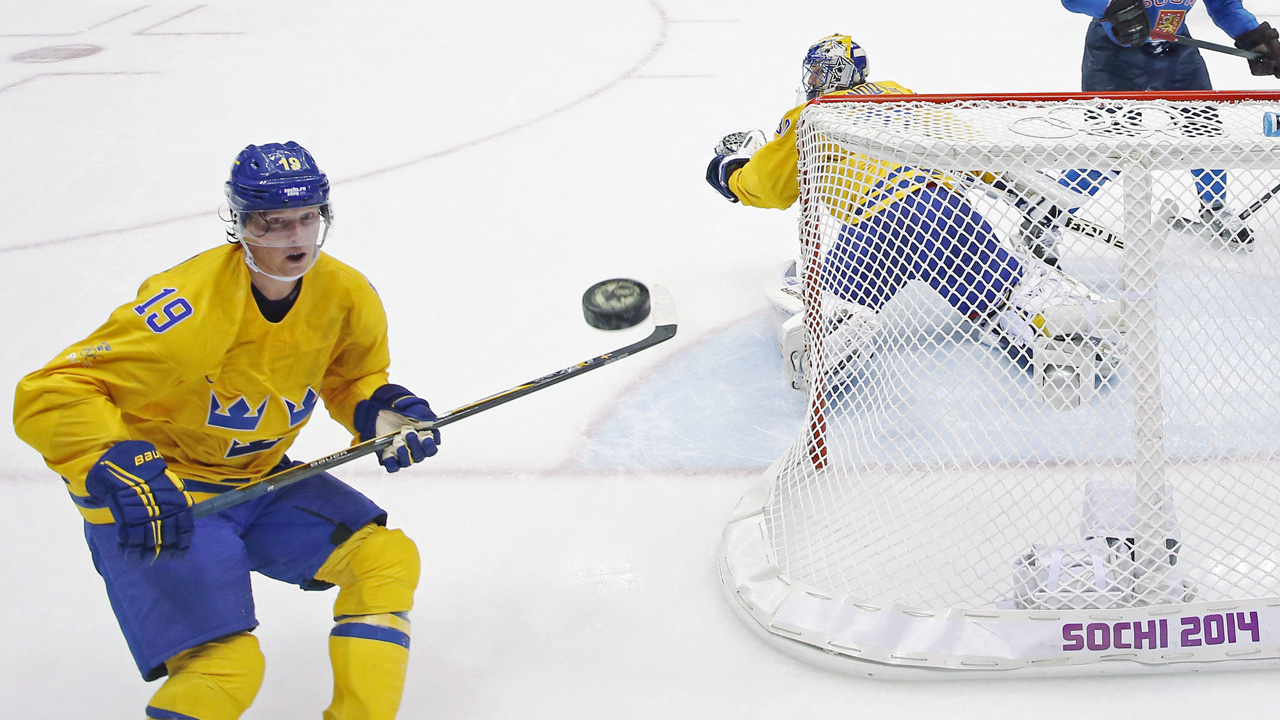

WASHINGTON – Nicklas Backstrom is finally ready to move on from a controversial failed drug test at the Sochi Olympics and he’s happy to do it with a silver medal to show for his efforts.
The International Olympic Committee cleared the Swedish centre’s name Friday by ruling that he hadn’t intended to enhance his performance when he was found to have too much pseudoephedrine in his system – the result of allergy medication Backstrom had taken for seven years.
Even though he was robbed of the opportunity to face Team Canada in the Feb. 23 gold-medal game, the 26-year-old seemed excited about the fact that he’ll retroactively be awarded some hardware that it once looked like he might never receive.
"Hopefully they’ll FedEx it to me," Backstrom said following Washington’s 4-3 victory over Vancouver on Friday night. "I’m happy about the decision, absolutely. Who wouldn’t be happy to get a silver medal?"
The ruling brought an end to a poorly handled situation by the IOC. Backstrom had been tested four days before the gold-medal game, but wasn’t informed that there was an issue until just two hours before puck drop.
By then, he was already going through his pre-game preparations at Bolshoy Ice Dome and had to bike across the Olympic village for a last-minute hearing where he was ruled out of the competition. That didn’t leave enough time to make a well-reasoned decision, especially in light of the fact Slovak defenceman Lubomir Visnovsky was allowed to play after a similar failed test at the 2010 Games in Vancouver.
Backstrom had informed the IOC of his use of the Zytec-D medication and was taking it under the supervision of Swedish team doctor Bjorn Waldeback, who the IOC disciplinary committee ruled was at fault for the positive test. It added that Waldeback "made a serious error" and would have trouble gaining Olympic accreditation in the future.
However, that won’t change the fact that Backstrom was clearly the victim of circumstances in this situation.
"It is unfortunate that his test results were not disclosed until just prior to the gold-medal game on Feb. 23, four days after the test was done," NHLPA executive director Donald Fehr said in a statement. "Had this matter been presented in a timely manner, it is possible that steps could have been taken to resolve this issue before the gold-medal game."
After the positive test was revealed, the NHL was quick to put out a statement saying that the Capitals forward hadn’t violated any of its rules. The International Ice Hockey Federation wisely distanced itself from the decision as well.
Backstrom has played well since returning to North America with nine points in nine games for Washington, but acknowledged that the disappointing end to his Sochi experience had still been eating at him. "I can’t lie about that," he said.
Finally on Friday, it felt like there was a little bit of closure.
"I’m disappointed that I couldn’t play the final game there against Canada," said Backstrom. "With that being said, I’m happy that the IOC acknowledged everything I said from the beginning (was truthful). … I’m just happy that it’s over."