It’s time to throw rocks at houses again.
Last season was one to remember, from the 2026 Olympics — where curling became the talking point of the entire Games thanks to the double-touch controversy — to the first-ever professional curling league, Rock League, launching in April. All of this helped the sport reach a new level.
However, the Olympic quadrennial coming to a close last season marks the time in the curling cycle when we see the most change.
So, with the Co-op Invitational, the first Grand Slam of Curling event of the 2026-27 season, just around the corner, the theme of this year is clearly change – new quadrennial, new teams, new season schedule, new broadcast info and new commentary teams.
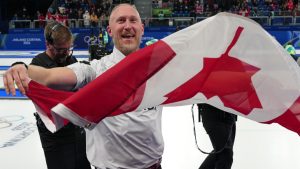
Basically everything is new except for the two biggest teams in Canada — reigning Olympic medal winners Brad Jacobs and Rachel Homan, who didn’t change anything except for a couple sponsors.
Even though this is a preview for what’s to come, it’s important to note most of the curlers already have been on the ice since August competing in satellite events, which also serve as Grand Slam qualifiers for lower-ranked teams.
The Curling Group will send out an invitation for one of the five Grand Slam events to the winner of each satellite event. If the winning team already is in the Slam, the invite will transfer to the highest-placed semifinalist in the world rankings. If all the semifinalists are qualified for the Slam, the highest-ranked quarterfinalist in the world rankings (must be No. 32 or higher after points from the event are added) will earn the spot.
So far, six of the 14 scheduled satellite events have been completed.
Here’s a look at all the storylines heading into the season:
Jam-packed schedule
It has been two years since the last major event of the year, the Players’ Cup, the biggest prize-purse Slam, happened during the second week of April. Now, the GSOC season will be wrapped up before Christmas.
How times have changed.
With the Rock League expanding this year to a total of five weeks compared to one last year, the curling schedule had to be reshaped.
Curlers are used to a schedule packed with major events — but only in an Olympic year, and only for the teams competing in the Games. Now, this seems to be the new norm.
The Rock League, which will begin in January, will begin in three cities before the Scotties Tournament Hearts in February, including one the week before the Canadian women's championship.
Not only are there multiple provincial playdowns happening during that time span in Canada, but with Rock League, the curlers aren’t with their normal teams.
The schedule affects the Canadian women’s teams more than the men’s. The time the women usually spend preparing before the biggest Canadian event of the year is interrupted by the new league. The men compete in the Brier after the Scotties so they will have time to regroup after Rock League and before the big competition.
The whole schedule is listed at the bottom of this article.
Important year for new teams
Year 1 of the quadrennial certainly won’t tell us who will win the 2030 Olympics, but it could tell us who won’t win.
This is a big year for the new teams created in the off-season.
Brad Gushue, who knows a thing or two about swapping players during a quad, said the development of a team can be unpredictable in a recent interview with Sportsnet.
“I’ve made some comments about some of the teams and I’m like, this one looks really good on paper, I love how it developed and then you can watch them play and it just comes out completely flat,” Gushue said. “On the flip side you can see that these four guys do not belong together and then they go out on the ice and they’re one of the best teams in the world.”
During the first year for a lot of these squads, the focus will be team building and seeing where they stack up against the rest of the field.
For example, if Tyler Tardi’s new rink, which looks really good on paper, doesn’t click and struggles throughout the season, it could force them to re-think the team they put together.
Other notable new rinks include teams skipped by Grant Hardie, Bruce Mouat, Kerri Einarson and Matt Dunstone.
It’s not just evaluation time for new teams, either. If Jacobs’ Olympic gold medal-winning rink loses a step, serious conversations about Marc Kennedy and Ben Hebert’s commitment to a full quad before retiring will come into play. Kennedy will be 48 at the next Olympics while Hebert will be 46.
New broadcast information and commentary team
Tuning into a Grand Slam will also be a new experience.
Rob Faulds will no longer be the commentary voice you hear for the Grand Slam after he retired in August with 51 years of broadcasting experience.
The role will now be filled by Darren Dupont and John Cullen as the host and play-by-play announcer, respectively.
Joanne Courtney, Brent Laing and Gushue will serve as analysts.
Even though Gushue has appeared on a Sportsnet broadcast , serving as an analyst for two games, he cautions everyone it’s going to take time before he settles into the role.
“There’s going to be a learning curve,” Gushue said. “I’m a rookie at this and I’m excited to go in and make mistakes because they’re gonna happen. But you know, like anything that I do, I’m gonna work hard to be as good as I can.”
This season, Sportsnet and CBC will be the home of the Grand Slam. Sportsnet’s TV coverage will now start on the first day of round-robin play for all Slams, and will air three draws per day Tuesday through Friday.
Sportsnet+ and CBC will carry the Saturday quarterfinals, while CBC will air the semifinals on Saturday evening. Championship Sunday will be on Sportsnet.
All of the coverage can also be viewed on Sportsnet+.
Key dates on curling schedule:
GSOC Co-op Invitational: Memorial Centre, Victoria, B.C., Oct. 13-18, 2026
GSOC Masters, Co-op Place: Medicine Hat, Alta, Nov. 3-8, 2026
GSOC National: Centre 200, Sydney, N.S., Nov. 17-22, 2026
GSOC Open: Fort William Gardens, Thunder Bay, Ont., Dec. 1-6, 2026
GSOC Players’ Cup: Slush Puppie Place, Kingston, Ont. Dec. 15-20, 2026
Rock League Week 1: Temple Garden Centre, Moose Jaw, Sask., Jan. 7-10, 2027
Rock League Week 2: Adirondack Bank Centre, Utica, N.Y., Jan. 28-31, 2027
Rock League Week 3: TD Place, Ottawa, Feb. 4-7, 2027
Scotties Tournament of Hearts: Eastlink Centre, Charlottetown, Feb. 12-21, 2027
Montana’s Brier: SaskTel Centre, Saskatoon, Feb. 26 - March 7, 2027
Women’s world championship: Location TBA, March 13-21, 2027
Men’s world championship: TD Station, Saint John, N.B., March 27, April 4, 2027
Rock League Week 4: Servus Arena, Red Deer, Alta., April 8-11, 2027
Rock League playoffs and championship: Wings Event Center, Kalamazoo, Mich., April 15-18, 2027