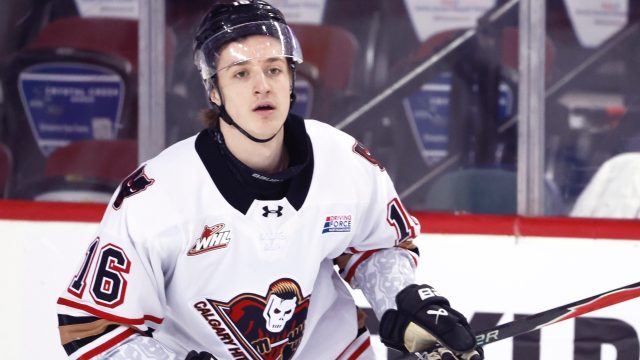
The preliminary round of the U18 Men’s Hockey Championship came to a conclusion on Monday. After a day off today, the tournament will resume Wednesday with the start of the quarterfinal round in Trencin and Bratislava, Slovakia.
Team Canada finished second in its group, behind host Slovakia who defeated the Canadians 2-1 in the opening game of the tournament. Canada will now face Sweden on Wednesday with puck drop scheduled for 8:00 a.m. ET.
The U18 worlds provide NHL scouts one last opportunity to view many of the top draft-eligible prospects in high leverage games. Despite the fact each player will be judged on their entire body of work over the course of the full season, prospects have a chance to leave a final impression on NHL teams that could be very important when it comes to how they're slotted come June.
Here are some of my latest observations from the tournament.
Team Canada
Slovakia’s victory over Canada was the main reason the hosts claimed Group A, but the Canadian team went on a tear after their opening loss. They defeated Latvia, Norway and Finland by a combined score of 21-0.
Canada has managed to find its scoring legs in the past three games, but equally as impressive is the fact they haven’t allowed a goal against since the nine-minute mark of the third period in their opener, which came off a penalty shot.
Here’s how Canada compares to the rest of the teams in the tournament:

Mathis Preston, 5-foot-11, 176 pounds, right shot forward
Preston had a bit of an up and down year in the WHL. He was traded from Spokane to Vancouver and ended his season with 18G-22A in 46 total games, but he’s been noticeable at this tournament.
Preston contributed 2G-3A in the preliminary round and averaged just over 15 minutes per game of ice time while being deployed at even strength and on the power play. Preston is at his best when he’s moving his feet, playing quick, and involved in traffic. So far, he’s been playing to that identity at the U18s.
He’s been above the play when his team doesn’t have control in the offensive zone, creating turnovers and pouncing on pucks in high danger scoring areas. If he continues his strong play in the medal round he will undoubtedly rise in the overall rankings ahead of the draft.
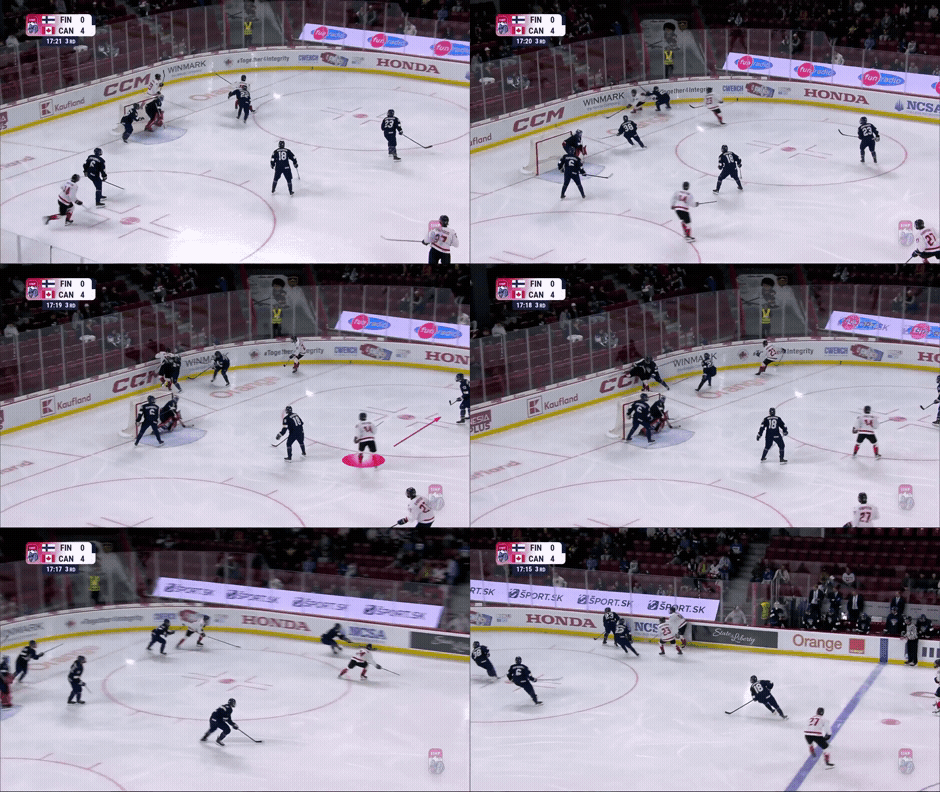
Ryan Lin, 5-foot-11, 174 pounds, right shot defenceman
Lin has played to his identity this week. The transitional defenceman has quarterbacked one of Canada’s power play units and averaged over 22 minutes of ice time total. Lin has produced 1G-5A to lead all defencemen in scoring through the preliminary round.
One of the things scouts look for in players is their willingness to venture outside of their comfort zone and display an element that they otherwise might not consistently play to throughout the year. In Lin’s case, a moment occurred in Canada’s game against Finland when he stepped up to finish an open ice hit when the Finns were trying to exit their own zone.
Here’s the clip of Lin finishing his hit on the Finish forward. As impressed as I was with the hit itself, I’m equally pleased with how hard Lin skates back to his zone to support defensively after engaging up ice:
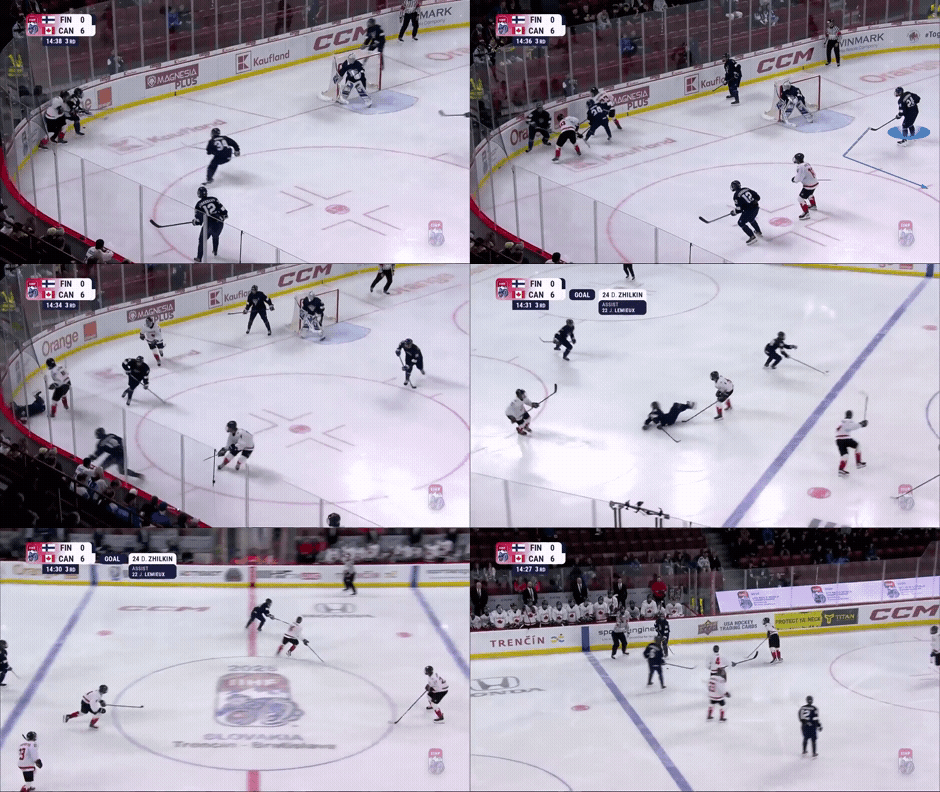
Dima Zhilkin, 5-foot-10, 185 pounds, right shot forward
Zhilkin was born on Oct. 21, 2008 and because his birthdate falls after Sept. 15, he isn’t eligible for this year's NHL Draft. Instead, Zhilkin will be monitored as one of the top forwards available for the 2027 NHL Draft.
Zhilkin has had a terrific tournament so far. He’s contributed 5G-2A, with two of those goals coming on the power play. He’s a lethal shooter who leads the event in goal scoring. Zhilkin is the kind of player who will “lurk” at times instead of being visible for an entire shift. When he finds quiet ice his quick release from all angles results in Grade A scoring chances and often with the puck being deposited in the back of the opponent's net.
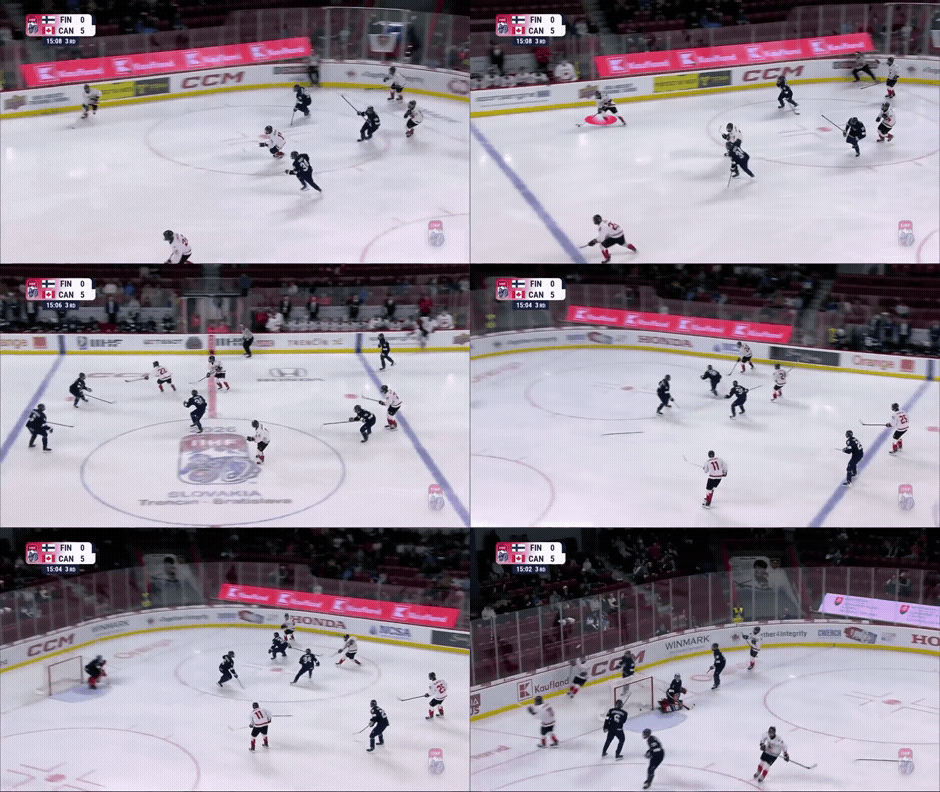
Ben Macbeath, 6-foot-2, 190 pounds, left shot defenceman
Macbeath has been a riser in draft rankings throughout the second half of the season. Representing Canada, he has generally been paired with Ryan Lin, but has also taken some shifts with others on the roster. His deployment has ranged from 15-22 minutes per game, with almost all of his shifts coming at even strength and the penalty-kill.
What I like most about Macbeath’s game is his ability to manage what’s in front of him. He rarely takes risks that force him out of position. He fronts opponents in the defensive zone, adds an extra layer off the rush offensively, and can be elusive moving from side to side to open up shooting lanes in his opponent’s end.
Macbeath has been held off the scoresheet at the tournament so far, but his plus-6 rating and the fact he matches up against top lines is exactly what I expected from him coming into the event. I project Macbeath as a two-way defenceman who will likely land on a second pair at the NHL level.
Team Finland
The Finns have been a curious team to watch at this tournament. They defeated Slovakia 5-4 in overtime, but also got pumped 7-0 by Canada. I’m not sure what version of their team will show up for the medal round.
Juho Piiparinen, 6-foot-2, 203 pounds, right shot defenceman
Piiparinen is captaining Finland and logging a ton of ice time in all situations. His ice time has ranged between 20-23 minutes per game.
He is an excellent skater. He tracks pucks defensively on time and has the agility to extend plays in the offensive zone. He’s also responsible when moving pucks. Piiparinen sees the ice and distributes accordingly. He has the potential to be a middle-pairing, two-way NHL defender in time.
With the skill set that he presents it’s curious to me how he doesn’t produce more offence. Piiparinen has been held pointless so far in the tournament. As much as he impresses me with his skating ability, he struggles to get pucks to the net when he opens up shooting lanes for himself. It holds him back for now, but the NHL team that drafts him will work with Piiparinen to extend plays an additional half-second instead of blasting pucks into the shin pads of his opponents.
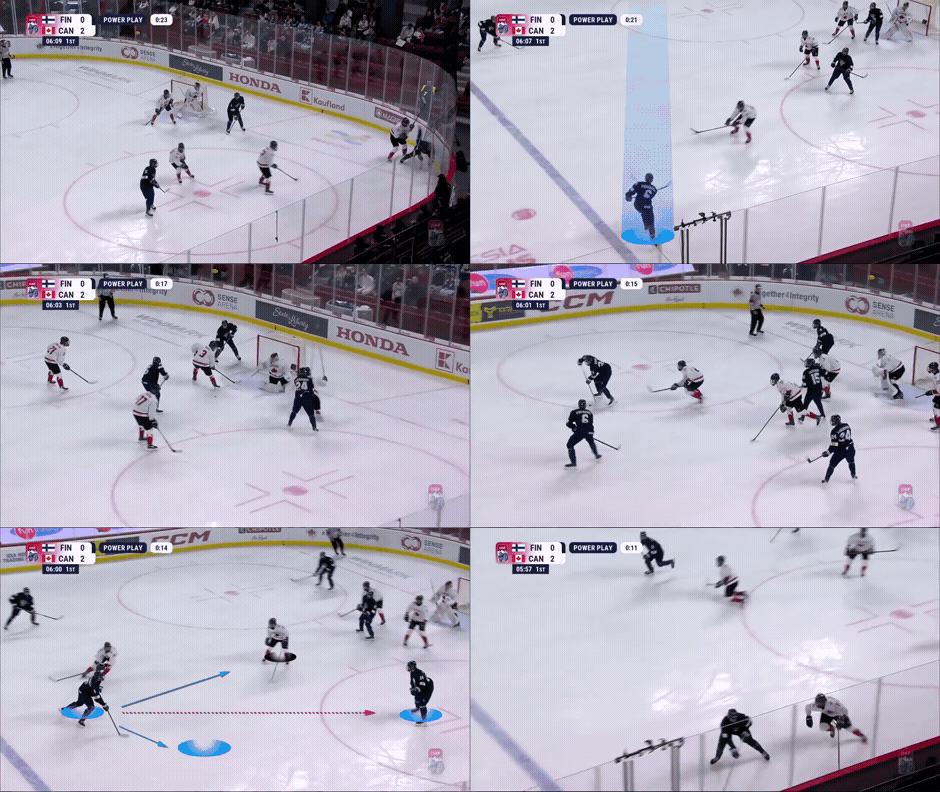
Here’s an example of what I’m describing...
Piiparinen distributes the puck to start the sequence then pushes to the high slot looking for a shot chance. His agility is on full display as he retreats to the top of the zone to reset, but when he ends up handling the puck at the top of Canada’s zone he chooses to shoot from his first option.
I’ve diagramed two additional options he could have made use of instead of shooting the puck into the defender. If he would have taken one extra stride to his right, he would have had a better shooting lane to direct the puck on net. Alternatively, if he would have moved the puck to the flank quicker his teammate might have had an opportunity to one-time a shot on net.
Quarterfinal Games
In Wednesday's quarterfinal you'll see the following matchups:
Czechia vs. Finland: 6:00 a.m. ET in Bratislava
Canada vs. Sweden: 8:00 a.m. ET in Trencin
USA vs. Latvia: 10:00 a.m. ET in Bratislava
Slovakia vs. Denmark: Noon ET in Trencin



 1:23
1:23
 1:48
1:48