All the telltale signs of fall are upon us. A slight chill in the air, the changing colours, the shorter days, the seemingly overnight arrival of that Spirit Halloween store down the block. And perhaps most importantly, the start of the Major League Baseball post-season.
It took all 162 games to finalize this year’s 12-team playoff field, as the Houston Astros and Philadelphia Phillies made it by the skin of their teeth and clinched on the final day of the regular season. They’ll join six other teams in the Wild Card Series, with all four best-of-three matchups opening on Tuesday.
Catch all the 2026 MLB post-season action on Sportsnet and Sportsnet+, and view the full schedule here.
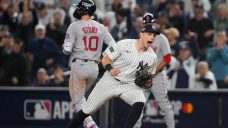
The feature matchup in this year’s wild-card round will write the latest chapter in The Rivalry between the New York Yankees and Boston Red Sox. The Bronx Bombers prevailed in this very setup just one year ago — coming back to topple Boston following a Game 1 loss — so, you can be sure the Red Sox will come out firing in this showdown of top pitching staffs.
On the other side of the American League bracket, the Astros will host the breakout Chicago White Sox after both clubs survived late-season slips. The great thing about October baseball is that it offers a clean slate to all who earn their way past the regular-season grind, something both of these teams will hope to take advantage of this week.
On the National League side, it’s another rematch from the 2025 playoffs between the San Diego Padres and Chicago Cubs and an NL East battle between the Phillies and Atlanta Braves. All four clubs have looked like World Series contenders at points this season, but none were able to stake a claim within the Senior Circuit’s upper tier alongside the Milwaukee Brewers and Los Angeles Dodgers.
With all that said, let’s dive further into the specifics of each matchup before first pitch on Tuesday.
American League
No. 3 Houston Astros (81-81) vs. No. 6 Chicago White Sox (84-78)
What’s working for the Astros: If there’s one thing that’s worked for Houston this season, it’s Yordan Alvarez. Through the good, the bad and everything in between, the newly minted AL batting champ delivered an MVP-calibre campaign in 2026 and will be at the heart of any post-season success the Astros achieve. And luckily for the Astros, the six-foot-four slugger’s bat didn’t cool any in September as he bashed five homers with a 1.009 OPS in the final month. Alongside Alvarez’s monster presence in its lineup, Houston also has a starting staff that has quietly excelled of late, pitching to a 3.06 ERA over its last 24 games.
What’s working for the White Sox: The AL regular-season leader in runs scored, it’s been all about the bats for Chicago in 2026. Infielders Munetaka Murakami (35), Miguel Vargas (33) and Colson Montgomery (31) all finished with 30-plus-homer campaigns as the driving forces behind the White Sox’s boom-or-bust lineup. That’s not to discount the rest of the hitters on the Southside, including Chase Meidroth, Tristan Peters, Sam Antonacci and Randal Grichuk, who were key contributors for Chicago throughout its resurgent season.
Where the Astros are vulnerable: It’s no secret that Houston limped into October on the back of a 12-13 September, becoming the first club in MLB history to make the playoffs with a .500 record in a full season. The Astros’ bullpen faltered down the stretch, ranking 19th in ERA in September as relievers not named Josh Hader, Bryan Abreu and Ethan Pecko struggled to aid a depleted rotation. How Houston gets through the always-pivotal Game 1 is also up in the air, as Hunter Brown and Hayden Wesneski were both needed over the weekend, meaning Houston will likely have to open the series with a bullpen day rather than bring either starter back on short rest.
Where the White Sox are vulnerable: After three straight 100-plus-loss seasons leading into 2026, Chicago is sorely lacking playoff experience. Yes, veterans such as Grichuk, Andrew Benintendi and Tommy Pham have their fair share of reps in October, but when the chips are down, can the AL’s fourth-youngest roster rise to the occasion? The White Sox saw their 5.5-game cushion in the AL Central evaporate as the stakes got higher down the stretch, and the October stage can be relentless — something this core of Astros stars is more than familiar with.
It’ll all come down to: How the White Sox limit Alvarez’s impact. Expect Chicago to dare the rest of Houston’s lineup to take the defining swing of this series. If Alvarez is held in check, can the likes of Isaac Paredes and Jeremy Peña muster up enough offence to keep pace with Chicago’s big boppers?
No. 4 New York Yankees (93-68) vs. No. 5 Boston Red Sox (87-75)
What’s working for the Yankees: Pitching, pitching and more pitching. New York was far and away the best run-prevention team in baseball this season, closing the year with a 3.24 ERA behind a Cam Schlittler-led staff. It’s a change of pace in the Bronx to have the pitching staff be the team’s defining trait, but the Yankees enter the playoffs also ranked top-five in strikeout rate, WHIP, batting average against and home runs allowed per nine innings. New York’s staff could get even stronger by drawing on its starting depth and moving the likes of Carlos Rodón and Will Warren to the bullpen.
What’s working for the Red Sox: For a rivalry that has boasted some of baseball’s brightest offensive stars, this Red Sox-Yankees matchup could turn into quite the low-scoring series. Boston’s rotation should be tough on New York’s hitters, as Payton Tolle, Sonny Gray and Ranger Suarez were straight-up dominant to close the season, combining for a 1.60 ERA and 66 strikeouts over 67.2 September innings. Lurking beyond that trio is baseball’s best bullpen by ERA, which features five or six legit leverage options, headlined by Aroldis Chapman and Garrett Whitlock.
Where the Yankees are vulnerable: Will he or won’t he play? That’s the million-dollar question in New York before rosters are locked in on Tuesday. “He,” of course, refers to Aaron Judge, who returned from a months-long rib fracture to play seven games before a calf strain sent him back to the injured list. The Yankees’ offence has been a mess during his extended absence, with the team carrying a .691 OPS from June 1 — the date Judge first sat out with injury — through the end of the regular season. While New York has still been able to homer at a respectable rate without Judge, there’s no denying that the tenor of the series will change depending on his availability.
Where the Red Sox are vulnerable: No team scored fewer runs in September than the Red Sox. Between Willson Contreras’s absence and the struggles of season-long producers Wilyer Abreu and Ceddanne Rafaela, Boston arrives in the Wild Card Series with its bats in need of a major boost. Perhaps Contreras, who did return to the lineup on Sunday, can be the difference-maker against the Yankees’ elite pitching staff. But if the Red Sox’s offence can’t wake up, they could be headed for a repeat of last year’s playoff exit in which they mustered just six runs at Yankee Stadium.
It’ll all come down to: The offensive stars. Pitching is clearly set to rule this series, so a big swing or two from either team’s top hitters could decide who moves on. Judge and Contreras fit in this category, but Adley Rutschman, Roman Anthony, Ben Rice and Cody Bellinger all have the talent to play hero.
National League
No. 3 Atlanta Braves (94-68) vs. No. 6 Philadelphia Phillies (88-74)
What’s working for the Braves: Of the teams set for wild-card action, none were as consistent as Atlanta. The Braves took the NL East lead on April 8 and didn’t look back, riding one of baseball’s most well-rounded attacks to their bounce-back season. And now that it’s here, Atlanta will lean on its lineup of major producers (Ronald Acuña Jr., Matt Olson, Michael Harris II, Drake Baldwin), staff ace (Chris Sale) and late-game weapons (Raisel Iglesias, Robert Suarez, Dylan Lee, Didier Fuentes) against the Phillies. After clinching the division on Sept. 20, the Braves have also had the advantage of spending the last week preparing for their return to playoff baseball.
What’s working for the Phillies: Philadelphia did itself no favours in dropping 10 of its final 16 regular-season games before clinching on Sunday. But now that they’re in, the Phillies will once again look to prove they’re built for October. With a four-man rotation of Cristopher Sánchez, Zack Wheeler, Jesús Luzardo and Aaron Nola that can go toe-to-toe with any crew of starters across baseball, Philadelphia should have a puncher’s chance in any series the rest of the way. Kyle Schwarber and Bryce Harper are worth keeping an eye on, as well, as no hitter has more post-season homers than either member of the Phillies star duo since 2022.
Where the Braves are vulnerable: Much was made of Atlanta’s trade-deadline haul — or lack thereof — as the Braves failed to swing a trade for Jacob deGrom and ended up with Tyler Mahle as their lone reinforcement for a short-handed rotation. And while Mahle ended up pitching admirably after the deal, Atlanta’s group of starters still leaves something to be desired for a team that has designs on playing deep into the post-season. With just Sale, Mahle and Grant Holmes currently healthy, the Braves have no choice but to rely on that trio and lean heavily on their bullpen, a strategy that could come back to bite them as they pitch opposite Philadelphia’s sterling rotation.
Where the Phillies are vulnerable: Philadelphia’s recent slide has shown how much its offence depends on its stars. Of all Phillies batters with at least 150 plate appearances this season, only Schwarber, Harper and Bryson Stott finished with an OPS above .715. In September, all three saw that OPS drop to .720 or below, as the Phillies finished the month ranked 29th in runs scored. It’s fairly simple, but the Phillies will either need their top bats to return to peak form, or for their supporting cast to completely flip the script on their season in order to find enough offensive success to compete in these playoffs.
It’ll all come down to: Atlanta’s Game 2 and 3 starters. The Braves don’t necessarily need Mahle and Holmes to match Philadelphia’s loaded rotation pitch-for-pitch, but they will need one of the two to handle the Phillies lineup if Sale can take care of business in Game 1.
No. 4 San Diego Padres (91-71) vs. No. 5 Chicago Cubs (89-73)
What’s working for the Padres: San Diego found its mojo in the second half and enters the playoffs as one of baseball’s hottest teams. Fernando Tatis Jr.’s resurgence — 20 homers and a .996 OPS since the all-star break — has played a major role in the Padres’ turnaround, but the club’s stabilized rotation and elite bullpen have been just as important. While Tatis and Co.’s turnaround makes the lineup dangerous, Mason Miller, Adrian Morejon, Bradgley Rodriguez and Yuki Matsui make the back end of the bullpen the most formidable part of San Diego’s roster.
What’s working for the Cubs: Chicago boasts a deep offence and the best defensive nine in the majors, with MVP favourite Pete Crow-Armstrong leading the way on both sides of the ball. 10 different Cubs with at least 200 plate appearances finished the season as above-average hitters, by wRC+, as the Northsiders racked up the most runs in MLB. After struggling through eight post-season games in 2025, Crow-Armstrong will be in search of his signature moment to cap a terrific year that saw him post just the sixth individual 10.0+ fWAR season of the past decade.
Where the Padres are vulnerable: As much as the return of Canada’s Nick Pivetta has boosted San Diego’s rotation, it’s still a group that has some warts entering this series. While Game 1 starter Michael King has been solid, Pivetta hasn’t been able to extend beyond five innings since returning on Sept. 7, and potential Game 3 starters Robbie Ray and Walker Buehler have struggled to build much momentum in a Padres uniform. San Diego is likely to rely heavily upon its bullpen regardless of who starts, but with such thin margins in a short series, it can’t afford to be put in an early hole by a rough outing from its rotation.
Where the Cubs are vulnerable: Their rotation. Chicago worked hard to reshape its pitching staff on the fly at this year’s deadline, but the returns have been mixed thus far. Kevin Gausman (4.83 ERA) and Clay Holmes (4.25 ERA) have been uneven and figure to feature prominently in the club’s playoff plans. Beyond its deadline acquisitions, Chicago could also give the ball to lefties Matthew Boyd, Shota Imanaga or David Peterson — all three of whom have struggled with the home-run ball at times this season and don’t match up particularly well with San Diego’s righty-heavy offence.
It’ll all come down to: The Cubs’ offence vs. the Padres’ pitching. If San Diego is to avoid a second straight wild-card loss to Chicago, it will have to contain MLB’s highest-scoring lineup. On the other side, the Cubs will likely need to put up some bigger run totals to give their pitching staff some breathing room.