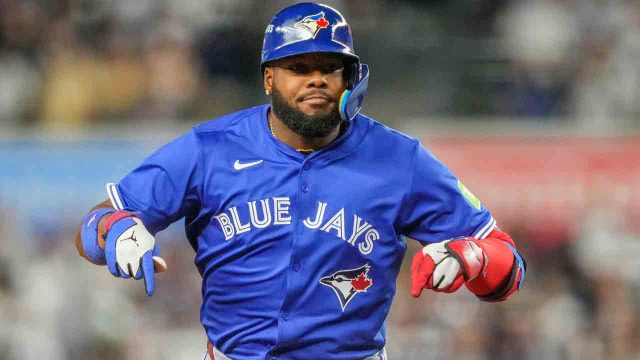
As the Toronto Blue Jays approach the trade deadline, there is more attention being paid to who might leave the team than who might join.
Part of that is because there is a finite number of internal trade candidates, while the pool of potential trade targets is larger and harder to project. A bigger reason why departures are likely to be a greater focus than arrivals is that the Blue Jays — now sitting six games out of a playoff spot — look like sellers who will be swapping out higher-profile players than they receive.
That doesn’t mean Toronto can’t have a deadline that yields positive results for the organization, even if it shines a spotlight on how far below expectations 2026 has fallen.
While teams in the Blue Jays’ position are usually portrayed as trying to recoup whatever value they can from expiring or soon-to-be expiring contracts, sellers are filling needs just like buyers are. Those needs are more general than someone who can play a specific position for the rest of the season or plug a hole in a potential playoff rotation, but they are relevant nonetheless.
To better understand the type of players Toronto could target, it’s helpful to take stock of what its organizational needs are based on who is currently on the roster (both the 26-man and 40-man), how long those players are under team control, and which top prospects the team could be planning around.
Blue Jays on Sportsnet
Watch coverage of the reigning AL champion Toronto Blue Jays throughout the season on Sportsnet and Sportsnet+.
Blue Jays on Sportsnet
Organizational Need 1: Starting pitching
The 2026 season has taught the Blue Jays several painful lessons, but one of the clearest is that a supposed surplus of starters can easily turn into a deficit. Quickly breaking down where Toronto’s starting options stand, it’s clear the team could use more help in this area heading into 2027, even if it’s just in the upper minors.
Current Rotation
Dylan Cease: Locked in as a top-of-the-rotation starter for six seasons after 2026.
Kevin Gausman: Contract expires after 2026.
Trey Yesavage: Free Agent in 2032.
Shane Bieber: Contract expires after 2026.
Spencer Miles: Completely unproven as a traditional starter. Injury history makes workload build-up difficult.
Currently on the IL
José Berríos: May not be available until late 2027 or 2028 due to Tommy John surgery. Hasn’t been effective since the midpoint of 2025.
Bowden Francis: Could be healthy at some point in 2027. Radical performance differences between 2024 and 2025 with a minimal track record before that — a wild card.
Cody Ponce: Likely member of 2027 rotation but still coming off an ACL surgery and has just 57.2 MLB innings. Will be 33 next season.
Max Scherzer: Contract expires, and retirement is likely following 2026.
Jake Bloss: Recently had a shoulder injury setback, and hasn’t been healthy or consistently effective in the minors since joining the Blue Jays in 2024.
Patrick Corbin: Contract expires after 2026.
In the bullpen or on the 40-Man roster
CJ Van Eyk: More so organizational depth than a prospect at age 27; hasn’t missed bats or limited hard contact at Triple-A.
Chad Dallas: More encouraging results than Van Eyk in Buffalo, but 26 and working his way back from Tommy John surgery. Just one five-inning outing in 2026.
Ricky Tiedemann: Consistent injury roadblocks make a future in the bullpen likely.
Non-Roster Top-30 Prospects at AA or Higher
Nolan Perry (AA) – No. 3
Gage Stanifer (AA) – No. 6
Fernando Perez (AA) – No. 16
Danny Thompson Jr. (AA) – No. 25
Grant Rogers (AAA) – No. 30
Overall Status
Cease and Yesavage are strong building blocks, and there’s every reason to believe Ponce will be back in 2027, but there’s a lot of work to do here.
The Double-A rotation has some talent that could be impactful for the Blue Jays in the near future, with the fast-rising Perry, who has a 2.41 ERA and 85 Ks in 56 innings across three levels this year, leading the way. That may provide some comfort regarding the state of pitching in the organization overall, but adding optionable young starters was something the Blue Jays were considering even before their competitive situation became dire.
Injuries prevented Bloss and Tiedemann from being the next wave of starting options after the team’s established veterans, and the Blue Jays could use some close-to-the-majors starting talent.
Organizational Need 2: Outfielders
Over the course of 2026, much has been made about the team’s lack of right-handed corner outfield options and Davis Schneider’s inability to lock down a role in that context, but in a bigger-picture sense, the team just needs outfield talent.
On the Active Roster
George Springer: Extremely limited outfield usage, contract expiring after 2026.
Daulton Varsho: Contract expires after 2026.
Nathan Lukes: Arbitration-eligible for the first time in 2027, but next season will also be his age-32 campaign. Projects as a strong platoon-bat/injury fill-in as opposed to a lineup staple in an ideal scenario.
Myles Straw: Has team options in 2027 and 2028, but offensive limitations will keep him in a bench role if he sticks around.
Yohendrick Piñango: Has flashed offensive upside and shown major defensive concerns in limited MLB action. That mix has resulted in 0.1 fWAR in his first 53 games at the major-league level.
Davis Schneider: Has struggled to find a role in 2026 and doesn’t project to hold an everyday role in the future. Infield/outfield versatility, patience, and power still give him the ability to be a valuable bench player.
Currently on the IL
Anthony Santander: His first two seasons in Toronto have not gone as expected. Could bounce back at age 32 next year, but that’s not an outcome anyone can confidently plan around.
Addison Barger: Has the tools to be the Blue Jays’ long-term RF, but 2026 is a lost season, and he’ll enter 2027 as a 27-year-old with only one strong MLB campaign under his belt.
Jesús Sánchez: Arbitration-eligible for 2027, but could be a non-tender candidate with his 2026 characterized by a combination of rough defensive work and injuries.
Jonatan Clase: Looked good in a recent MLB cameo, but has been well below-average as a Triple-A hitter over the last two seasons. He could find a home as a bench player, but will have to fight for every opportunity.
On the 40-Man roster
Rudy Martin Jr.: Recent acquisition who has speed and strong offensive numbers in the minors, but he is also a 30-year-old journeyman who has yet to play an MLB game.
Non-Roster Top-30 Prospects at AA or Higher
RJ Schreck (AAA) – No. 9
Victor Arias (AA) – No. 11
Overall Status
Toronto has numerous outfield options beyond 2026, but most of them profile as role players rather than starters. The team will need reinforcements from outside the organization to bring this group back up to a competitive standard.
The Blue Jays are unlikely to get everything they need at the deadline, but improving this area of the org will be appealing. Many of the players listed above have gotten opportunities to establish themselves as building blocks, and none of them has done it. Barger is the closest to reaching that status, but there are no sure things here.
Organizational Need 3: Middle infield
There is an argument to be made that Andrés Giménez and Ernie Clement are a viable combination up the middle with years of team control after 2026 while JoJo Parker and Arjun Nimmala are on the way, but that may paint an overly rosy picture of the situation.
On the Active Roster
Andrés Giménez: Giménez is under contract through at least 2029, and he won’t turn 28 until September. His excellent glovework has him providing acceptable overall value, but since the beginning of 2025 his 70 wRC+ ranks eighth-worst among 224 players with at least 600 plate appearances. Instead of bouncing back offensively since joining the Blue Jays, he’s declined further. The team will have to contemplate if they’re comfortable punting a lineup spot for defence as long as he’s Plan A at shortstop.
Ernie Clement: Under team control through two more seasons after 2026, and has been more productive than ever offensively this year. Defensive struggles have been significant, and he will be 31 next season. While he’s unlikely to move, in the last three seasons he’s been more of an above-average starter than a foundational player who couldn’t be traded or upgraded on.
Luis Urias: Not a safe bet to remain on the roster through 2026, and contract expires after the season.

Blair & Barker
Jeff Blair and Kevin Barker talk all things Blue Jays and MLB. Airing live on Sportsnet 590 The FAN, Sportsnet 360 and available on demand wherever you get your podcasts.
Latest episode
Currently on the IL
Lenyn Sosa: Arbitration-eligible through 2029, but also has no options and hasn’t provided much evidence he can stick on the roster over a long period of time.
On the 40-Man roster
Charles McAdoo: Only a part-time second baseman and struggled in his MLB cameo this season.
Non-Roster Top-30 Prospects at AA or Higher
Arjun Nimmala (AA) – No. 2
Josh Kasevich (AAA) – No. 12
Cutter Coffey (AA) – No. 23
Adrian Pinto (AA) – No. 29
Overall Status
Keeping Clement and Giménez in place beyond 2026 is a defensible idea, but they are a relatively high-floor, low-ceiling pair the Blue Jays may need to upgrade at some point. That would require a move more dramatic than what’s likely to happen at the deadline, but adding depth would be helpful even if the team is relatively content with their starting duo.
The trio of prospects at Double-A aren’t around the corner for a variety of different reasons, whether it’s Nimmala’s youth and the value in not rushing him, or the struggles of Coffey. Pinto has had a choppy season that’s included personal leave and injury, and he doesn’t seem close to the majors.
Meanwhile, Kasevich has a solid 111 wRC+ at Buffalo, despite a total lack of power (three HR in 403 PA), and he impressed in the spring. Another name to keep in mind who is neither on the roster nor the top prospect list is Jay Harry, who is smashing .303/.368/.529 for the Bisons, but his free swinging (48.5 percent chase rate) and lack of raw power (107.2 mph max exit velocity) are concerns.
In 2024, the Blue Jays were satisfied with their catching tandem, but felt like there weren’t options behind it in the minor leagues they trusted, and they acquired Brandon Valenzuela. A move for a middle infielder nearing the majors might interest Toronto, particularly if the team has its doubts about Kasevich and Harry. The idea of a Parker-Nimmala era is enticing, but even in a best-case scenario, it’s not imminent.
What about the other spots?
The Blue Jays won’t be totally beholden to acquiring players at the positions above.
The team could easily pick up a corner infielder, catcher, or reliever if they felt the value was good enough — perhaps even in hopes of snagging an appreciating asset if the near-term roster fit was dubious. It’s difficult to project medium and long-term needs, and talented-enough players can find new positions or be used in future trades.
At the same time, the difficulty Toronto had finding playing time for Sean Keys shows how hard corner-infield at-bats are to find with the Blue Jays, the club has two excellent catchers in their twenties, and the late-inning relief core of Louis Varland, Tyler Rogers, Jeff Hoffman, Braydon Fisher and Mason Fluhary is all around at least through 2027.
While sellers don’t approach the trade deadline with the same acute needs that buyers do, their organization strengths are relevant to the players they target. The Blue Jays will keep what’s in their cupboard in mind as they approach August 3.

 2:44
2:44