
Sportsnet’s Donnovan Bennett sits down with three leaders of the LGBT community for an in-depth discussion on the triumphs, struggles, and future of being an openly gay athlete in an ever-changing sports landscape.
By Donnovan Bennett
More and more, LGBT issues are on the front line in the sporting world. With All-American Bruce Jenner going viral for becoming a woman named Caitlyn, and Michael Sam making headlines for deciding to come to Canada after coming out before the NFL Draft, the LGBT sports conversation has become just another part of the greater sports conversation.
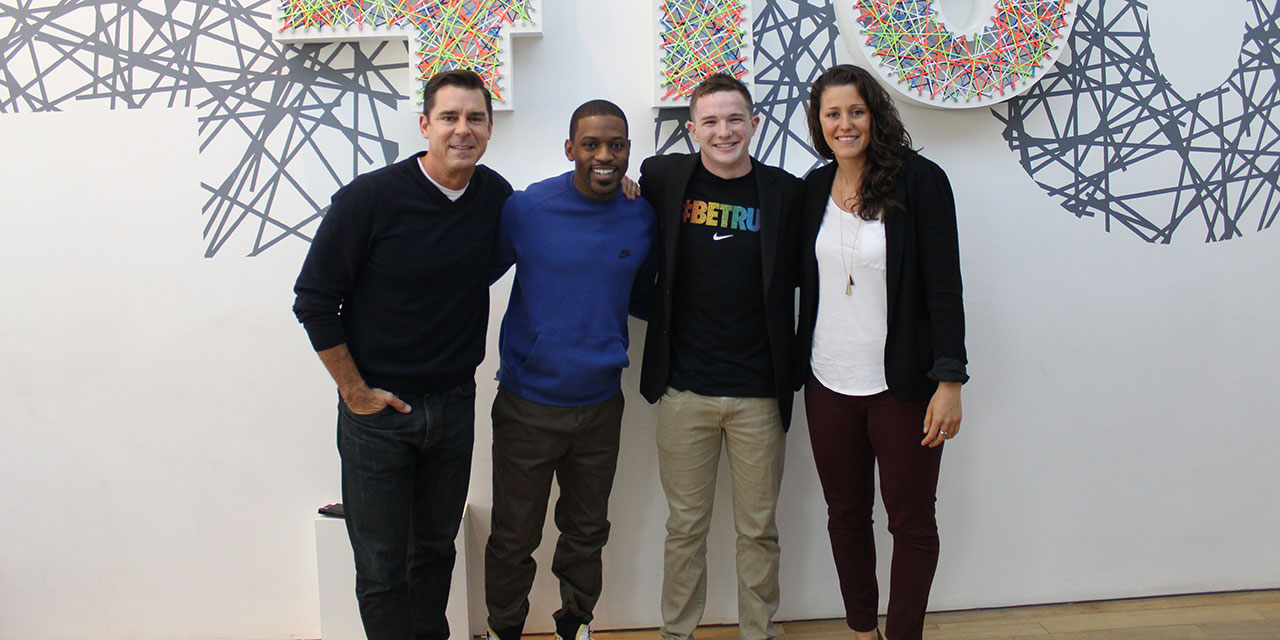
I sat down for a roundtable conversation with three out athletes of different sports, backgrounds, ages, upbringings, and stages of their career to see if there were any commonalities in their journey. The only thing they had in common, beside their sexuality, is they were featured in the documentary “Out To Win” that was the talk of the Toronto Film Festival and “South by Southwest”, and is produced by Canadian filmmaker Matthew Thomas. As I met with four-time Canadian Olympic Gold Medal-winning hockey goalie Charline Labonté, former Major League Baseball player Billy Bean—now the league’s ambassador for inclusion— and Conner Mertens, the first active openly gay NCAA football player, they candidly shared their unique perspectives.
And the timing couldn’t have been better, given the Supreme Court’s decision in America that gay marriage will officially be legal in every state in the country. What’s more, with Pride weekend on the horizon in Toronto, I couldn’t help but think it won’t be long before multiple openly gay athletes are leading the parade in Canada for the world to see.
Sportsnet: Congratulations on the film “Out to win” Why did you feel compelled to not only be an out athlete but be a part of the documentary?
Billy Bean: I feel a huge responsibility to the athletes that are coming after me. I’ve come to see the great examples of, say, Billy Jean King and Martina Navratilova, [but] there were not many male role models for someone like me.
Charline Labonte: When I decided to come out it was not about me. It was about opening this window on gay athletes, on female athletes. As opposed to what [Bean] said, right now I think there is a lack of women role models so that’s why I was like, why not? I’m out. I’m very comfortable with who I am. And if I can help one, two, three people this is going to be worth it.
BB: I think people having the opportunity to see an athlete in the prime of their career, whatever their truth is, it encourages you to be authentic. So it’s not so much as you need a representation of a lesbian female athlete or a heterosexual athlete but just people feeling safe to be themselves. It’s an exciting time. And that doesn’t happen until people are actually in it, which, again, is different from my generation. You see this kind of exposure is going to help so many future athletes. You just start to pass the baton forward, and pretty soon it won’t matter.
SN: Not many people understand how difficult that decision is to come out for anyone, but can you put in perspective as an athlete how difficult that decision is?
Conner Mertens: We live in a society where athletes are elevated to this ultimate God-like status. Nobody has a bigger platform. And when you have these athletes that have so much power, they have power to create change. And with that power comes this idea that we’re supposed to be perfect. We’re supposed to follow that line of what it means to be a male or female athlete. And the problem is if you don’t follow that narrative you’re scrutinized or ostracized and seen as weak. Of course in athletics the most important thing is to be competitive. You don’t want your teammates thinking you’re weak; you don’t want your opponent thinking you’re weak. So you internalize all these things that society calls a weakness and hide them so you can protect yourself, so you can protect your team, so you can excel at something that is influential in our society.

SN: There is a certain expectation that as a gay or lesbian athlete you’ll be up front about talking about it, but at the same time you want to be seen as the same. If you’re, say, an African American athlete there isn’t an expectation that you’ll speak on all African American issues. At times can being seen as someone who needs to further a cause be a burden for an athlete?
BB: Well I think the example you just mentioned, the African American athletes were expected to if they were great 30 years ago. And you saw a lot of baseball players – Hank Aaron, Willie Mays- because they were so good at something and it was so important to so many fans. It is a huge responsibility and part of my job now with Major league baseball it’s one of my biggest concerns because I don’t want one player to have to harness the whole movement on their shoulder while they are trying to play. As a former athlete you know just how hard it is to get yourself to stay healthy, to stay focused, keep your body in shape and have the opportunity especially in team sport. So creating a culture of acceptance and having images that are consistent and strong and that the entire sports world see’s that reduce that stigma that’s when you’re going to see our younger athletes less concerned about their private lives and being part of the equation.
But the truth is athletes that are rising in their sport that is the defining component to their personality. Nobody is asking personal questions about straight athletes that are at the top of their sport. The conversation is still relatively new and that’s why it’s important the visibility of a project like this you help create positive examples. These two are both in it still (pointing to the other two on the couch) it’s an amazing shift as opposed to looking in the rear view mirror and saying it wasn’t a positive situation for me. The bravery, the true heroism is having the courage to be your best self while you’re out there competing.
SN: Michael Sam has made some comments that he’s been criticized for criticizing athletes that he knows that are gay and aren’t out. For something that’s such a personal decision, how do you negotiate a gay athlete’s responsibility to the gay community against their own personal struggle?
CL: I think it’s so personal.
BB: I do, too.
CL: Of course we know gay athletes that aren’t out yet. And maybe they’ll never come out. But that’s none of my business. It took me awhile, you know I’ve been out to my friends and people but it took me a good 12 years to be comfortable enough to get to that point where ‘alright this is me, and I’m proud of it.’ In life that’s one of the goals, to get to a point where you are really comfortable with who you are.

CM: Yeah and with that some of the reasons people do come out is to make things easier for future generations but also it’s a personal thing to make themselves better. That’s the reason I came out, I was tired of hiding this part of myself and living a fake life. So if coming out will be a detriment to you and negatively impact you, then that’s their own narrative and that’s their decision. A lot of the mentoring that we do the first thing I tell somebody is “I’m not here to help you come out”. That’s not my job. I’m just going to walk alongside you. I’m going to help you be you. Whatever that looks like in your life is what it’s going to be. At the end of the day that’s the entire point of what we do. So that people can be there true authentic selves; without fear of ridicule without fear of discrimination.
BB: I think every athlete regardless of your sexual orientation worries about the life span of your career. When you haven’t seen a lot of images in a positive way it remains a concern. Whether they are ready or not it’s not the absolute responsibility of that one athlete. It’s got to be a healthy situation and that timeline just like anyone’s coming out story, everyone’s growth and progression of who they are through their twenty’s, we are talking about young people still and it’s a lot of responsibility to put on them at one time. The environment we are creating, the dialogue, the visibility. I was in the big leagues at 22 if I could have seen a film like this; it would have been a life changing experience for me. And so we have to remain in that mindset of forward progress. It’s not a perfect day because there is still discrimination, there is still racism, there is all these things that we’ll always have to overcome but the beauty about sports is that you move that message a little bit faster.
SN: In the film former NBA player Jason Collins talks about the fact he didn’t get a phone call from the President, but shortly thereafter Michael Sam did. That’s how fast this movement has become over the last couple years. Have you been surprised about how fast people are trying to be on the right side of history when it comes to this discussion?
BB: I’m not surprised. I’m happy about it.
CM: Yeah, I think it’s about time.
BB: We are getting so much smarter so much faster as a society that we’re looking at history and saying it shouldn’t take as long as it has and for the President to step forward and make that call it sends a message of acceptance that is long and wide. It was a generous thing to do. I think we don’t always get to hear the word thank you from someone you’ve helped. We have something that Nike was a huge part of called the LGBT sports coalition and has financed and supported that in incredible ways and it has empowered young LGBT athletes. Conner is right in the middle of that, he can explain it, where young athletes are networking and talking about their positive experiences on campus. Their coaches are supportive, their student bodies are supportive and it’s just a thrill to see it from my perspective.
CM: Yeah it’s really beautiful. When you think about the history of social change, sports have always been in the mix of it. You see Nelson Mandela with apartheid and Jackie Robinson and all these athletes and sports have been sort of the catalyst for social change and I think this is just another example of that. We are going to look back and see these people. These Billy Bean’s & Michael Sam’s who were blazing the trail. We’re going to read history books of these people. My kid is going to read about the civil rights movement and the LGBT movement and we are going to see these names and it’s going to be a beautiful thing but right now probably what makes me most emotional is when I’m mentoring a kid and there is a tonne of them now and every time they talk about their experiences I get emotional because it’s so beautiful. There is one kid that I’m helping right now who is a sophomore in high school and he’s completely open at his school. Not hiding anything about his sexuality, he’s captain of his basketball team, he is a prom king. He’s completely comfortable in his environment. He’s playing a sport he’s succeeding in his sport. I‘m getting chills thinking about it right now because it’s so beautiful and it would not have happened without the people that have come before us and the changed that’s happened. And it’s happening faster and faster.

SN: You guys are different ages, and from different sports and backgrounds. Do you learn from each other’s experiences?
BB: Absolutely. Just sitting here together, sharing experiences helping each other not perpetuate the same mistakes. The beauty of the way these kids are able to network today is know they all know each other before they meet together. I never met anyone who was like me until 4 or 5 years after I played. It’s like anything to be a part of that arch, that movement forward. It helps you have closure for things that didn’t go the right way at least for me in my career.
SN: We know of more gay athletes in female sports than their male counterparts. Charline, is your journey different because you’re a female athlete?
CL: Yeah I think so. First of all I play a team sport. In Women’s hockey it’s an open environment, and it’s always been like that. Plus, I was somewhat straight before I thought I was gay. It didn’t change anything, people didn’t change towards me. It’s more like “Oh, alright. Let’s move on”. So people really talk about it and everything else openly so it’s really never been an issue. So that’s why for me I never had the need to come out because people knew, my family, my friends, my team which is the most important part. But when I realized, when I hear different stories of these guys and non-athletes and I realized there is still so much work to do I just wanted to help a little bit but for me it’s been an easy process.
SN: But Connor, when you came out it was very publicly and you were able to see the feedback almost immediately via social media. What was that experience like for you?
CM: First it was very scary. I had no idea how people would react. I knew I was comfortable no matter what, but I was hoping it would be some sort of positive impact.
BB: That’s where it’s different now for these kids. You know people can be much more aggressive with you when they are not in your company.
CM: [nods in agreement].
BB: And so it’s interesting when people ask the question a lot to me…when is the next? Because we don’t have an out player in hockey or football or baseball right now? It seems like the media is better with it, the players are much more evolved and while not everyone is comfortable with it I’d say the majority are if you are a good enough player and a good enough teammate. But the nature of the internet and Twitter and Facebook and you can put yourself out there to be attacked and some people just aren’t used to that. It doesn’t matter how famous or how successful you are it’s not fun to have negative things said about you. So there is a very interesting balance between the harmony you have amongst your team. You know when my story came out a bunch of my former Padres teammates said “you know the way our relationship was it would have been OK within the club”. But then the problem is how do you keep it there? It’s just inevitable the news would move around. For me it wasn’t that I didn’t like my teammates enough to trust one or two. I just knew I wasn’t comfortable with myself yet and I think that’s the difference when Conner mentions these kids are young enough and they feel empowered and they say “you know what I’m ready. I’m ready for the world to accept me as I am”.
We may not have 25 out athletes all feeling comfortable to come forward. We know we are getting to that place. Some are interested in wanting to know what it was like for Conner to come out but others are so afraid and want to make it to the NBA or the NFL and feel that might be the deciding factor on why a team passes up and takes the next guy or the next girl. So it’s an individual process and we can’t just put a blanket statement towards what it means to come out.
CM: I was definitely like that. I would distance myself from anything LGBT related until I was about 18. There was a gay/straight alliance at my school and I was the one that was avoiding that hall. I was so terrified that I would be guilty by association in any way. And I just denied it so long. Even the advocacy work I do now. I’ll see a kid that favourites a tweet every once and awhile or retweets something but it takes him 4 months until he says anything to me and then he’s like “I was trying to say something for so long. I just didn’t want anyone to figure me out”. And it’s heartbreaking that we are at that crossroads where these people are finally getting the courage to reach out but they are afraid of the backlash they might receive for reaching out.
BB: I feel it’s still a win that these kids see they have an opportunity if they are ready for it. Sometimes perfect gets in the way of good. I was doing work with anti-bullying organizations before I got back with Major League Baseball. The less stories we hear of kids who feel they couldn’t get past that dark moment, we have to remind ourselves and keep sharing the stories that we are making good progress. And give them the time. If they need 6 months from the first retweet; you let the conversation happen on its own and I think that’s why mentorship is a huge generous gift back to the community if you are willing to do it. Because it’s not easy. You get invested, at least for me. I’ve had this going for 15 years almost now and you get so invested in the well-being of these kids especially if they are athletes you can relate to that. Athletes need a village for them to succeed. It’s just the truth you need solid home environment, you need to stay healthy, you need coaches, you need opportunity and you want to give them opportunity to be their best.
SN: I look at a musician like Lada Gaga who mobilized a fan base based on her LGBT stance and wonder why is nobody in the athletic field doing that. With brands like Nike doing things Iike the “Be True” movement do you think it is going to make it easier for star athletes to champion the cause?
CM: One of the most empowering pictures I’ve seen and I’m getting emotional thinking about it. This is why I love sports because it’s so romantic. Anthony Nicodemo he’s an out high school basketball coach and when his team went to playoffs Nike sent them the “Be True” shirts for warm ups. There is a picture of them all lined up and Anthony is just sitting off to the side. This entire high school basketball team supporting their LGBT coach and the movement itself. That was so reaffirming.

SN: What does “Be True” mean to you?
BB: For me it’s very simple it means everyone is invited. The door is open wether you’re young or old. Before the only ones we ever wanted to see are the best in the world and now we realize participating and getting yourself out there that is triumph as well. And the more images we see of diverse people competing in athletic event whether it’s on a Lilly field or a Pop Warner field or an Olympic stadium. Wherever it just sends a really strong message and it tells everybody get out there and participate. Go compete!
CL: To me it kind of rhymes with inclusion. I think we are so lucky to be athletes. Sports forces diversity. Different backgrounds, different cultures, different religion but once you’re on the field. You’re all the same thing. And I think that’s what it is. That’s what it’s all about.
__________________________________________________________________________________________________________________
