I took my last gym class in June 2012.
When I went back to school that fall, it was on the heels of the Summer Olympics in London; I was 15 and had just started Grade 10. In the near-decade since then, a couple of things about that year’s Olympics have stayed with me: the Spice Girls’ performance at the closing ceremony and the conversations surrounding Gabby Douglas becoming the first Black woman to win all-around gold in solo gymnastics.
My memories of Douglas’s floor and beam routines are foggy at best. What’s vivid is the response to them. On Twitter, there seemed to be more discourse about her hair than her historic wins. Online, the narrative was that her bun wasn’t sleek enough, her edges weren’t tame enough and her kitchen was completely askew. It was more than just a few unsavoury tweets: the criticism was widespread enough to get brought up during her sit-down with Oprah and to come to the attention of Spike Lee.
This absolutely wasn’t the first time that a Black woman in sports had come under fire for her hair, but it was the most overt display of this that I had seen at 15. At the 2012 Olympics I saw sports and beauty standards come together to create a cocktail that prioritized appearance over athletic achievement.
When classes began in September of that year, I opted out of gym. I figured that if I spent second period running laps and playing field hockey, I would spend the rest of my day paying the price with hair that had succumbed to my sweat and reverted back to its natural texture. I wasn’t resentful of my hair or unaccepting of the kinks and coils that formed as soon as I broke a sweat, but the world was — that much had been made clear that summer with Gabby Douglas.

Rogers is on a journey to build a more inclusive future for our team members, customers and communities across Canada. For more info on how, click here.
At the time, I didn’t see opting out of gym class as a direct consequence of the public’s response to Douglas at the Olympics. But almost 10 years later, it’s clear that the sequence is far from coincidental. The tsunami of tweets, memes and think pieces that emerged as a result of Gabby Douglas’s bun was a bleak articulation of the reality known to so many Black women: How good you are at what you do is of utmost importance, but how you look while doing it can be the difference between being acknowledged, getting overlooked or becoming the subject of uproar; it’s the difference between belonging and being othered.
What’s most disappointing is that very little has changed.
Last week, Douglas’s fellow Team USA gymnast Simone Biles joined other Olympians in a campaign for beauty brand SK-II. In a manifesto for the campaign, Biles wrote, “In gymnastics, as in many other professions, there is a growing competition that has nothing to do with performance itself. I’m talking about beauty. I don’t know why but others feel as though they can define your own beauty based on their standards.” She closed by saying that she’s “done competing versus beauty standards and the toxic culture of trolling when others feel as though their expectations are not met… because nobody should tell you or I what beauty should or should not look like.”
Biles speaking out is a step in the right direction — especially considering the fact that a 2016 U.S. study found that the Black women and girls surveyed “avoided getting their hair too wet during exercise because it made their hair ‘puffy’ or ‘nappy.’” Some of the women and girls surveyed admitted that “though they exercise, they refrain from too much exertion in order to protect their hairstyle.”
This isn’t necessarily out of vanity or self-hatred, though — it’s a means of assimilation. Transforming or taming our hair textures can be a step towards acceptance, or at least a step away from being under the meticulous hair microscope. Standing out and deviating from the Eurocentric beauty standards that Black women have been conditioned to compare themselves to can come at a steep cost.
In the workplace, our natural hair is seen as unprofessional, and we have to answer to our coworkers when we switch up our styles. At school, our hair can make us prime targets for playground teasing. On the court, it’s no different. Edges that aren’t slicked and swooped can be a bigger discussion point than whatever feats we manage to achieve. We have the autonomy to do what we want with our hair, and fitting in isn’t always the main motivation. But there’s a hyperawareness that we’ve had to adopt, where we consider how our hairstyle will be received.
In sports, this isn’t exclusive to disciplines with subjective judging, like gymnastics. And it’s not reserved for the Olympic podium either. I spoke to four Canadian women, each with different athletic backgrounds, to hear how sport and beauty have intersected for them.
These are their stories, in their own words.
SASHA EXETER
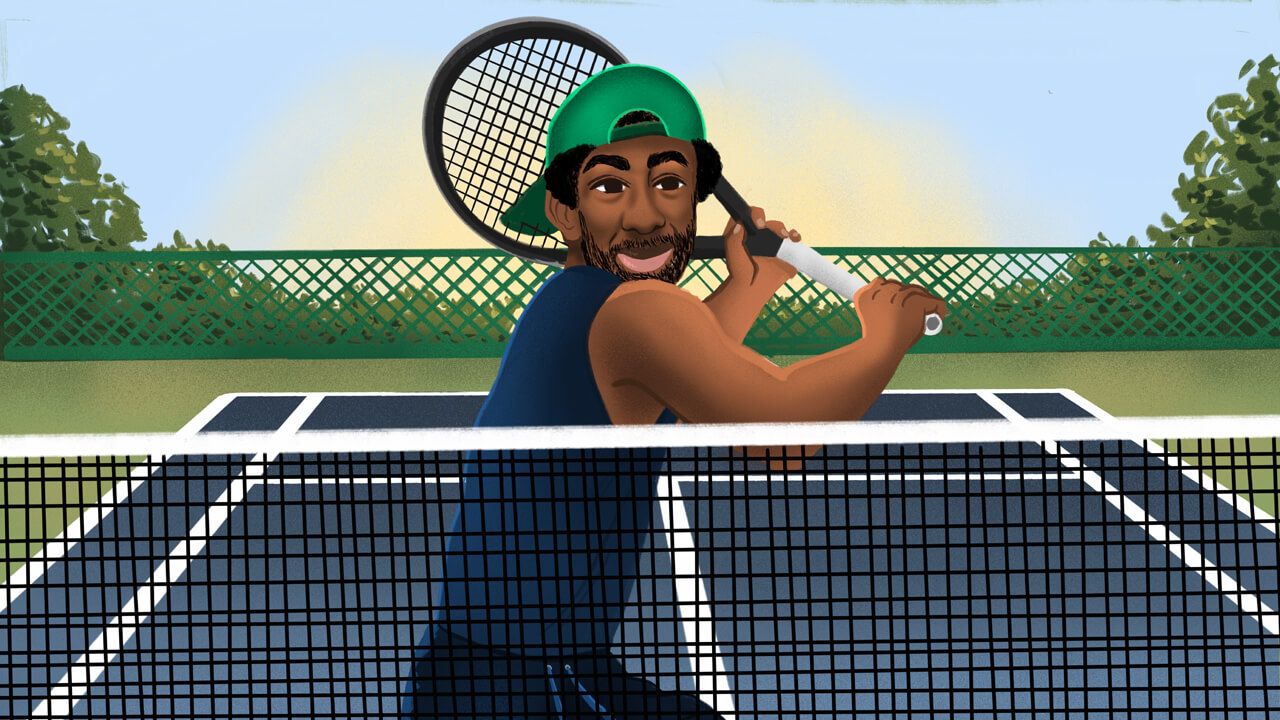
Sasha Exeter is an entrepreneur and content creator based in Toronto. She picked up her first tennis racquet at the age of five.
There are subtle and overt ways that our hair is scrutinized. Were there moments that weren’t as subtle where hair interfered with your journey as an athlete?
Every Black woman’s worst nightmare is to be caught in the rain, but the game of tennis can still go on when it’s raining…. If it’s sprinkling or drizzling, you can still play through that. I have memories of kids making fun of my hair as it slowly transitioned throughout the match from straight to kinky to basically an Afro by the end.
I remember the giggling and the sneering and the “What’s going on with your hair?” or “You have so many phases to your hair” and “You look like a Chia Pet.” They would sing that “Ch-Ch-Ch-Chia” song. It was embarrassing.
Did coaches ever intervene?
Never. The coaches were white, too, so they didn’t really understand. I remember one of my coaches at Indiana State did ask, “Why is your hair doing that? What’s going on with your hair?” and “Can you do something with your hair post-match before an interview? Because it looks kind of crazy right now.”
Did you feel beautiful before you got serious on your journey as a tennis player and did any of your experiences erode that?
It definitely eroded my self-confidence off the tennis court. People always find this hard to believe, but I never actually started to feel beautiful until my mid-to-late twenties. And here’s why: I think as Black athletes, especially Black women, our bodies are built differently than white women. And I remember being bullied from a very young age because my muscles developed quite early. I’ve always had very muscular arms, which was a huge insecurity, even to this day. If I’m dressing for a black-tie event and I’m speaking to a designer about what I’m wearing, I’ll often opt for something that has sleeves, just so I look a bit more feminine. And that’s probably just from so much damage to my psyche about my physique growing up. I was told I looked manly or overdeveloped and over-muscular, and didn’t feel feminine.
But if you look back at the sport of tennis, Chris Evert, who was America’s sweetheart at the time, was blonde with beautiful eyes and had a very slender and tall physique. And if you look at Zina Garrison, who was an excellent tennis player, you would see a stark contrast to the way her body looked and how she was developed. You know what? She was built very much like Serena Williams. She had very muscular legs, defined quads. She had a big butt and strong arms — and those muscles helped make her successful in her sport.
But I didn’t feel like that was beautiful. I didn’t understand the importance of my physique and the muscles that I had, and that if I didn’t have [them], maybe I would not have gotten as far as I did in the sport.
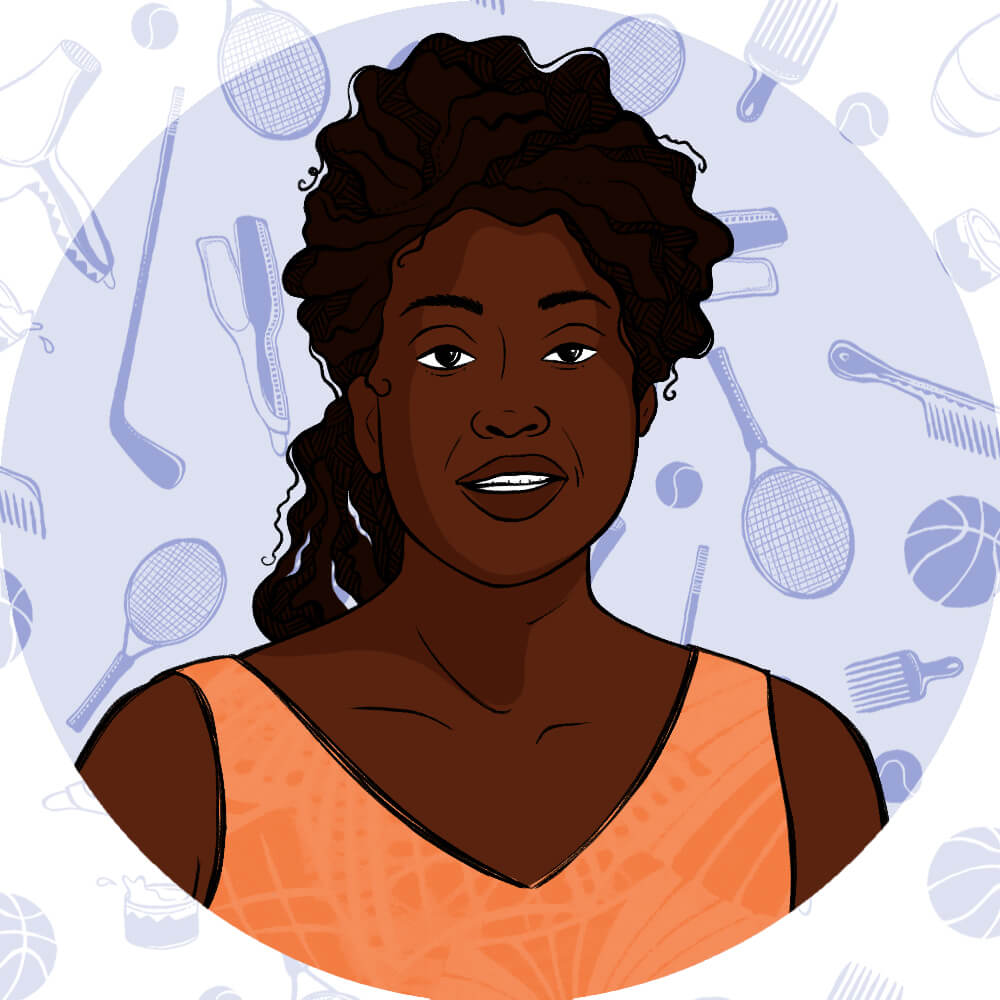
NASTASSIA SUBBAN
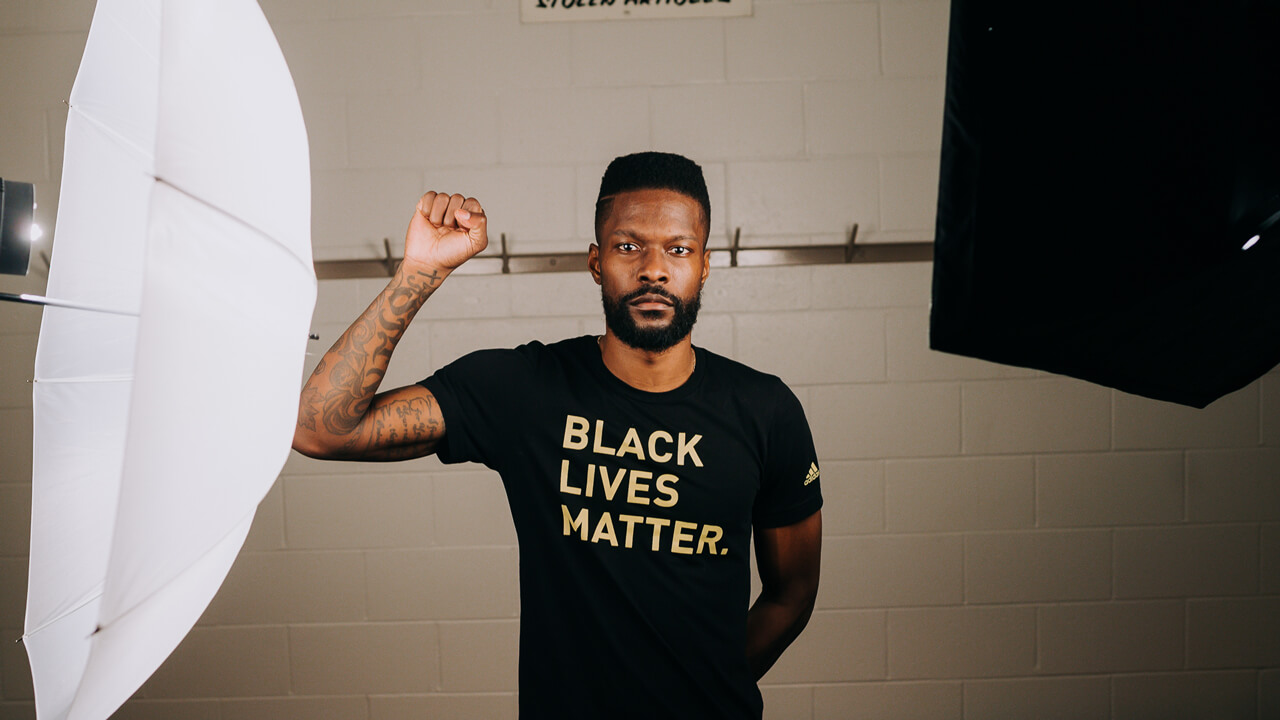
Nastassia Subban is an educator and speaker. She played basketball from childhood until she graduated from university.
From when you were playing to when you started teaching, have you noticed a change in how Black women and girls experience sports?
I spoke at Bill Crothers, the school in York Region [Ontario] that’s dedicated to sport, and I was basically speaking about the experience of being a Black woman in sport. Many of the girls agreed with what I had to say, but keep in mind, I haven’t played basketball since I was 23. I’m 39 now. That’s 16 years later. And 16 years later, girls are still nodding their heads and saying that that’s the same thing they’re dealing with. Like getting asked by teammates, “Can I touch your hair?” Or “How do you get your hair to be like that?” It’s still the same.
Or after a game when all of the girls want to go out, but my hair is soaking wet. Like, I can’t flat iron it right now because it’s soaking wet. And if I blow-dry it, that’s going to be a hot mess because the blow-dryer in the hotel is no good. These are all the things that white girls don’t have to think about. They wash their hair, they blow-dry it and they run out the door — we don’t. We don’t have that luxury. It sounds superficial and these are little things, but they all add up to the experience.
Why do you think it gets chalked up to vanity?
I remember explaining that to a teacher candidate that I was working with, and they were like, “Wow. I didn’t know that.” They see it as vanity or sometimes even defiance — because a lot of times with Black girls, that’s what it then gets chalked up to. Like “Oh, they’re being defiant. They don’t care about their credit. They’re going to fail school anyway.”
I explained to my teacher candidates that sometimes when their Black students get their hair wet, it can be a day-long process to get it back to the state it was in before it got wet. And it costs money. If you’re teaching or coaching, you have to be mindful of that.
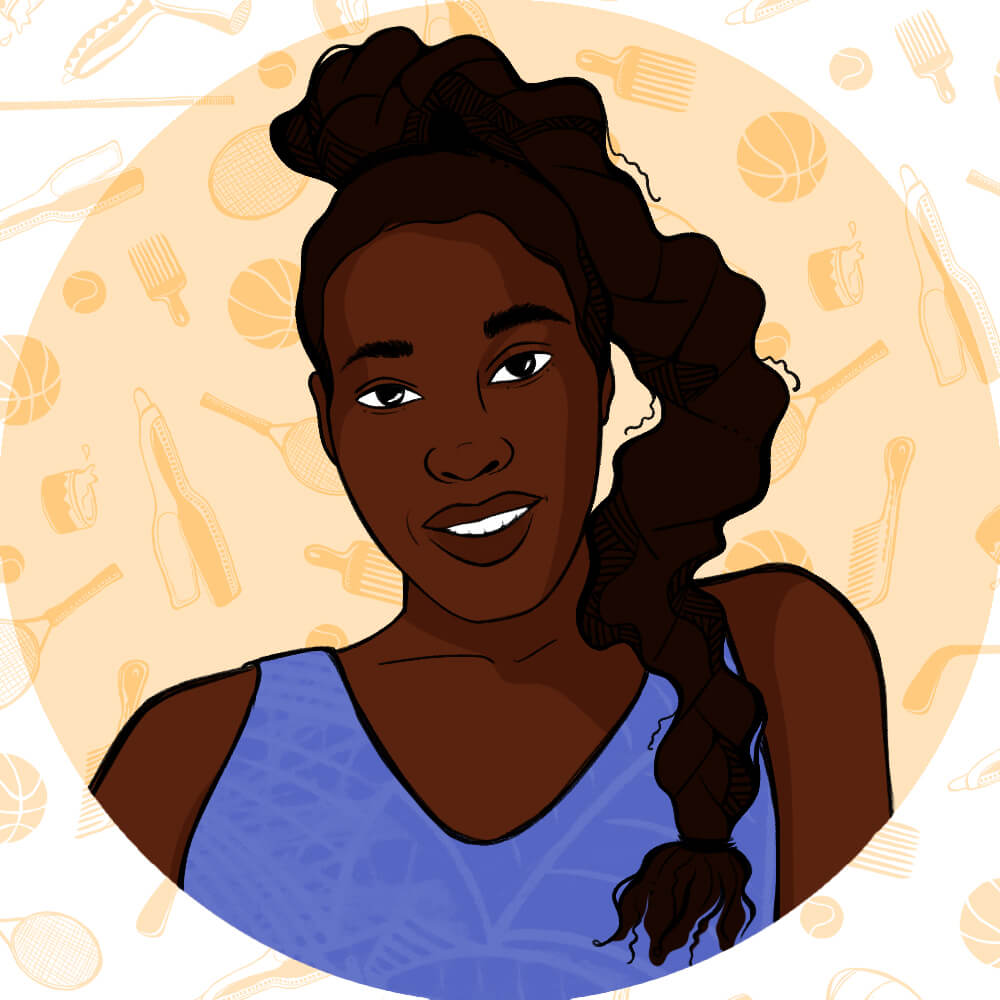
ACACIA HILL
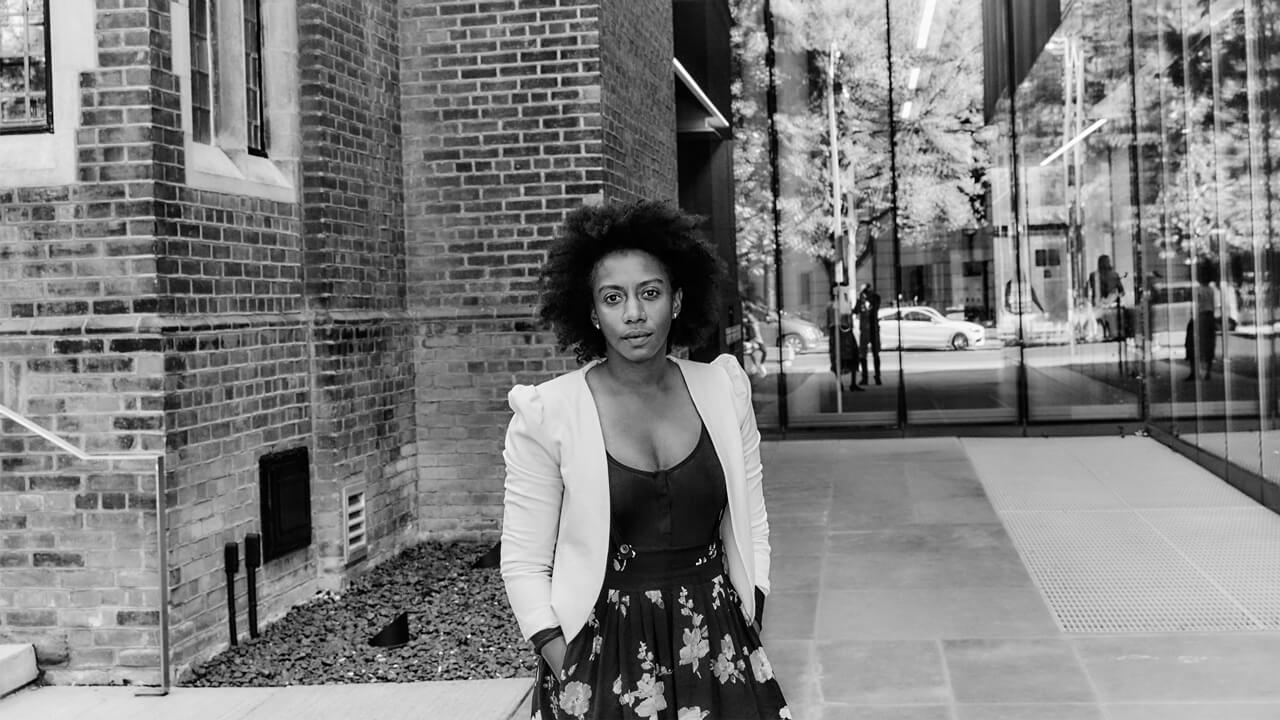
Acacia Hill is a former figure skater and the owner of the Brampton Hill Skating Academy, Canada’s first Black-owned figure skating school.
Was there ever a point when you felt excluded from the beauty process as a skater?
When I had dresses [for competitions] that were nude or had nude aspects to it, you could only get the nude fabric in one or two shades — and they’re mostly geared towards Caucasian skin tones. So, we would have to dye our mesh before handing it over to the dressmaker or else we would have this white material on our dark skin complexions that didn’t match. That was a challenge.
Growing up my mom was very good with always doing our hair for shoots and competitions. She could put us together with makeup and hair and everything. But I would often have to embrace more of a white quality to my hair. There was another skater, and she and her brother would wear their hair naturally in Afros. But I would always hear comments like, “Can’t those kids do something better to their hair?”
My mom would always perm my hair and slick it back into a neat bun to resemble more of a white look. Whereas these kids would wear their natural hair. It showed me that if you skate with natural hair, you will be heavily judged in this sport. They’ll say your hair isn’t clean and sleek, and that’s going to affect your marks. So, appearance is huge in our sport. We’re always making sure our hair is slicked and our mesh matches our skin. You can find mesh that matches your complexion now, but it took a really long time.
Now that you’re teaching, do you see those standards loosening up at all?
Not really. They still look at the overall package, and that includes your costume, your makeup and your hair. The marks are very subjective. So, your second mark, which has to do with your presentation and your program, if you do not look the way your program is supposed to be portrayed and you don’t have that European kind of beauty to your skating, I still think you get marked unfairly.
Because if you look at some of the Black students who are competing right now, you would never see them with their hair in an Afro. Maybe for like an ice-show number, but for competition at the Olympic level or even at the national level, their hair is always nicely neat in a bun or back in ponytails. So it’s still the same.
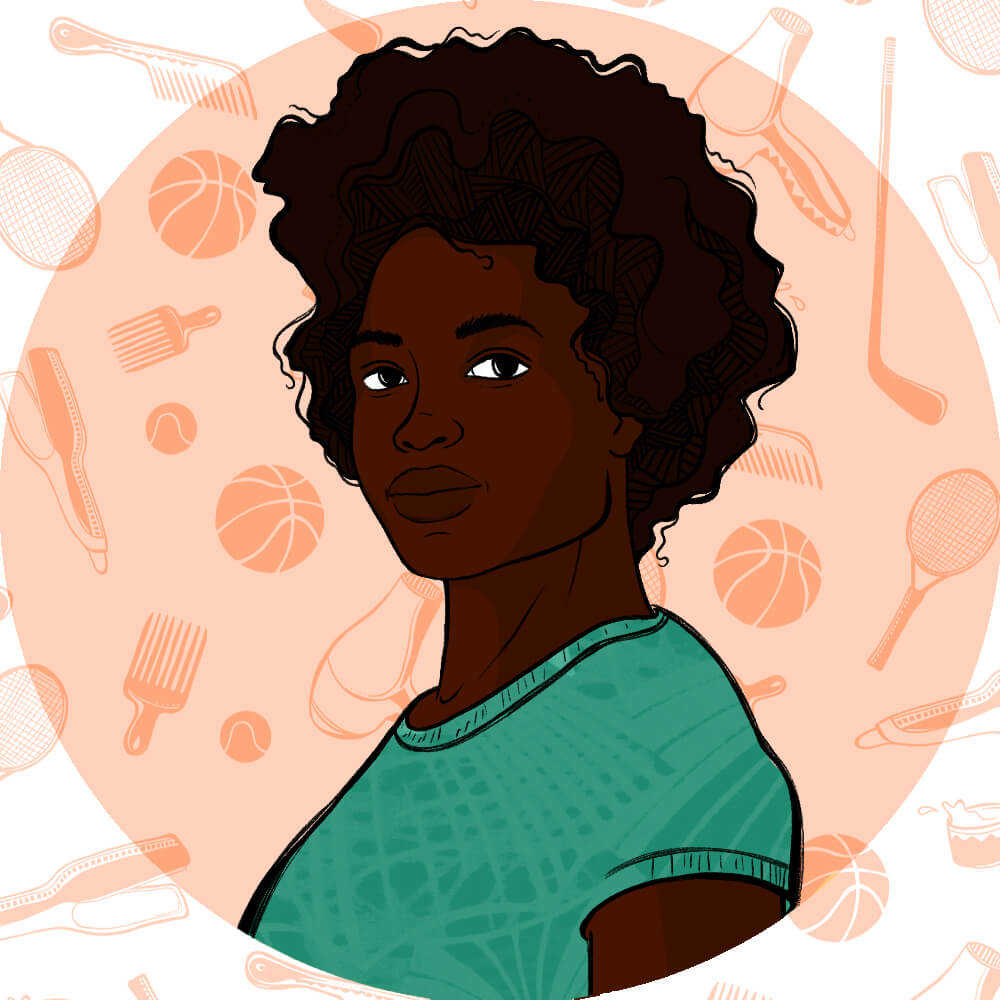
CRYSTAL EMMANUEL
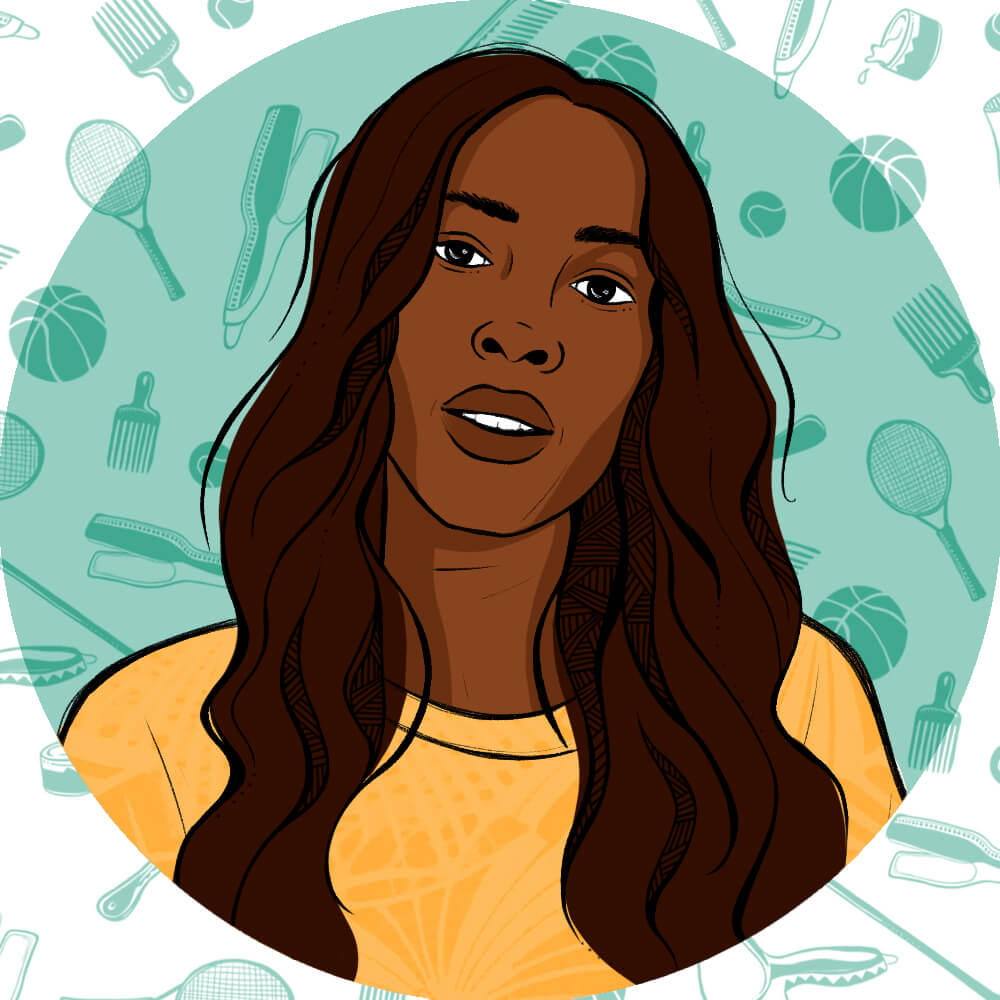
Crystal Emmanuel is a two-time Olympian, the national record holder in the 200 metres and Canada’s fastest woman.
In what ways have sport and beauty intersected for you?
I started track at the age of six and went pro when I was 17. Now I’m 29 and I’ve seen the journey from being the natural girl running in Barbados, not caring what happens to my hair and just having fun, to now needing to look a certain way so that I can attract certain people, in terms of brands and sponsorships.
Is looking a certain way to attract certain brands something that you were directly instructed to do or was it implied?
Years ago, I was running really well and I had just made the Olympic team. And one day at practice, I was telling my coach that I don’t understand why I’m not getting the spotlight that some girls are getting. And my coach was like, “Look around. What do you see? What’s the difference between you and them?”
I didn’t know what he was talking about at first, but then he was like “It’s their hair.” And I thought, What’s wrong with their hair? But they all had long, straight hair. It’s like, if you’re not wearing weave or if your hair is not straight, then there’s something wrong. But that shouldn’t be something I need to change in myself in order for someone to look at me or think that I’m worthy of wearing their brand. It’s like I’m supposed to look like everyone else that’s running on the track. It’s like I can’t be myself.
When you did try to conform, did people respond to you differently? Did you get the sponsors and the attention they claimed you would?
Well no, because I’m still not sponsored. I’m still fighting that fight. At one point I kind of lost track of who I was and what I was put on the track to do — that was my biggest mistake. In 2019, I was performing very well and thought, “Okay, I’m going to be seen now.” So I decided to put in a red weave. As soon as I did that, my coach told me, “Don’t get lost.” And I was like, “What do you mean? No, I’m good. I got this.” And in the heat of the 100-metre [at the 2019 World Championships], I didn’t make it to the final. I just didn’t understand what I was missing. I legit had to sit in the mirror, take a look at myself and ask, “What’s the issue?”
So I decided to take the red hair out and write out my plan. I knew who I was and I knew what I wanted. So for the semifinals of the 200, I was wearing my natural hair and I was the rawest I could be. I’m natural, I’m beautiful, this is who I am, and this is how I’m going to perform. My look shouldn’t cancel out my performance.
And that day, I ran the best 200 I ran that season. I missed the final, but I was happy because I learned a lesson. Now I know that I don’t need to change in order to perform on the track.