After MLB executives took a brief Thanksgiving pause from feverishly signing free agents ahead of next week’s expected work stoppage, it’s a good time to take stock of the best players remaining for teams looking to do some weekend shopping. Here are the top 10 free agents still on the market.
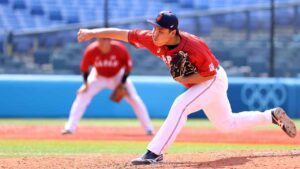
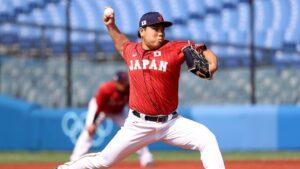
Seiya Suzuki
Age: 32
Position: Outfield
2026 WAR (per FanGraphs): 4.5
You could make a perfectly reasonable case for flipping Suzuki with the next player on this list, but we’ll give this particular 32-year-old corner outfielder the edge thanks to a more well-rounded profile that added a career-best defensive season in 2026 to a steadily productive bat that’s produced a 130 wRC+ over the last four years.
That assuaged one red flag in the game of a player who’s already a part-time defender — over the last two years, Suzuki’s played 143 games in right field and 134 as designated hitter — while cracking 600 plate appearances in back-to-back seasons lessened another following oblique issues earlier in his career.
Still, Suzuki’s placement atop these rankings is an indictment of this winter’s uber-shallow position player market and the dearth of quality right-handed hitting outfielders in today’s game. Clubs will no doubt prefer to get him on a four-year deal, but Suzuki’s camp can leverage this weak free agent crop to hold out for five and wait to see which team blinks first.
Randy Arozarena
Age: 31
Position: Outfield
2026 WAR: 5.5
Arozarena’s been slightly more productive than Suzuki over the last two seasons, posting a 135 wRC+ to his Japanese counterpart’s 128. The home run, strikeout, walk, and hard-hit rates are all comparable between the two. And even as Arozarena’s bat speed has declined with age, he’s found a way to compensate for it with a shorter swing that produced career-best rates for contact and strikeouts last season.
The big separators between these two are stolen base ability, which is a point for Arozarena, and defence, which is an edge for Suzuki. All else being equal, teams will prefer the superior defender.
But if the choice is between four years of Arozarena or five years of Suzuki at a similar AAV, it’s easy to talk oneself into the former. Particularly if you’re bringing Arozarena to a better offensive environment than Seattle’s T-Mobile Park, where he hit .250 with a .788 OPS last season, while on the road those numbers ballooned to .309 and .933.
Michael King
Age: 31
Position: Starting pitcher
2026 WAR: 2.6
Teams that missed out on this week’s run on starting pitching can still take a stab at wooing King away from an expected return to the Padres after he opted out of his previous deal with the club. That pact was signed last winter at $75-million over three years. This time around, coming off a better season without a qualifying offer weighing him down, King is positioned to do much better.
The 31-year-old doesn’t feature the kind of bat-missing stuff that produces high strikeout rates and juices optimistic projections, but he’s reliably limited hard contact over the years and just set career highs in starts and innings pitched after an injury-plagued 2025. Of the 67 MLB pitchers to throw at least 650 innings since 2021, only four — Max Fried, Zack Wheeler, Tarik Skubal, Corbin Burnes — have produced a lower ERA than King’s 3.06.
King obviously won’t come close to the massive commitments that quartet of aces signed in recent years. Yet in a market that awarded five-year deals to both Freddy Peralta ($25-million AAV) and Trevor Rogers ($24-million AAV), what’s to stop King from seeking four at a slightly lower AAV? That’s a reasonable price to pay for a mid-rotation starter coming off a 2.6-fWAR season.
Adrian Morejon
Age: 27
Position: Reliever
2026 WAR: 2.8
Morejon stands head and shoulders above the rest of this winter’s free agent reliever class and could flirt with a nine-figure deal despite being attached to a qualifying offer. That’s thanks to his youth (he turns 28 in February), dominance (2.37 FIP and 22.4 K-BB% over 86 innings last season), and projectability (he gained velocity from 2025 to ‘26, significantly improved his changeup, and has the arsenal to start if he wants to).
But teams are reticent to commit a lot of term and dollars to MLB’s most volatile position group for a reason, and Morejon’s 2026 ended with a shoulder issue that left him unavailable to the Padres in the divisional series when they needed him most.
Those reservations could be why he remains unsigned. as there isn’t a pitcher still available with as much arm talent as this left-hander. Yet with MLB hitters trending more left-handed over time — last season, 48.8 per cent of plate appearances league-wide were hit left-handed, the highest amount since the league expanded from 16 to 18 teams in 1961 — a fire-breathing leverage lefty has never been more valuable to a contender’s bullpen.
Jazz Chisholm Jr
Age: 28
Position: Infield
2026 WAR: 3.5
Up-the-middle defenders with plus power and speed are hard to come by, which makes the 29-year-old Chisholm an attractive addition for any team willing to bet his substandard 2026 was merely a blip. Yet that will mean finding a way to write off the left-handed hitter striking out nearly 30 per cent of the time while falling shy of 20 homers and finishing as a slightly below-average offensive contributor with a 98 wRC+.
Despite those difficulties, Chisholm’s speed and defence were strong enough to make him a 3.5-fWAR player last season, which positions him as a very good bet to return surplus value on a salary north of $20-million. And if a team takes advantage of the uncertainty its competitors have towards Chisholm and signs him to a short-term, prove-it deal, they could come away with one of the most efficient contracts a top free agent signs this winter.
Brandon Lowe
Age: 32
Position: Infield
2026 WAR: 4.9
There is no questioning what Lowe brings at the plate. He’s going to pull fly balls until the cows come home, and somewhere between 25 to 35 of them are going to clear the fence, depending on his luck. In between, he’s going to strike out more than you’d like but walk enough to keep up his OBP and finish as something around 20 per cent better than a league-average hitter.
The big question is his defence at second base, which was a liability for his entire career until it suddenly wasn’t when he posted a 98th-percentile OAA (not a typo) last season. If that grade was sustainable, he’d be signing a nine-figure deal. But it almost certainly isn’t, forcing teams to project how much of his sudden improvement is real and how long it can last.
At 32, Lowe should be able to keep his tried-and-true offensive approach humming over the course of a three-year pact. But if he’s a first baseman or designated hitter midway through, it changes the value equation dramatically.
Luis Arraez
Age: 29
Position: Infielder
2026 WAR: 4.1
Speaking of unexpected, unbelievable, and unsustainable defensive improvement, Arraez went from a middling infielder to an elite one overnight after signing a one-year, $12-million deal last winter with the Giants, grading as one of the best second base defenders in the sport after playing his way off the position and over to first base the two years prior with the Padres.
As with Lowe, there’s little reason to believe Arraez will continue being that good going forward. But if he can settle in as a merely average defender, it’ll help keep him playable at second for a couple years at least, making it easier for a team to carry his uber-unique bat.
No hitter in baseball makes as much contact, yet the 29-year-old will go weeks without a homer or a walk, which puts a lot of pressure on his unremarkable foot speed to leg out enough doubles to avoid being merely a station-to-station presence. Some team will feel it has the right roster construction to fit Arraez’s unusual profile. But it isn’t likely to be a robust market.
Clay Holmes
Age: 33
Position: Starting pitcher
2026 WAR: 1.8
Overshadowed in a crowded second tier of starters available this winter, Holmes would fit as a perfectly serviceable mid-rotation option on any team in the league. The 34-year-old has proven he can hold up as a starter after transitioning from the bullpen in 2025 (he’s missed time only due to a fractured fibula caused by a 111-m.p.h. Spencer Jones comebacker) and still gets as many groundballs as any pitcher in the game thanks to his nasty, running sinker.
Playing in front of a sound, well-positioned infield defence, Holmes can get you into the sixth with two runs or fewer on the board every five days, which is increasingly valuable in a league with vastly more innings to cover than capable arms. And come playoff time, when pitcher roles fluidify, his relief experience makes him a versatile weapon in a seven-game series.
The right-hander’s age limits the term he’ll command, but Holmes ought to be able to get something in the neighbourhood of the three-year, $48-million deal Foster Griffin signed with Cleveland.
Ian Happ
Age: 32
Position: Outfield
2026 WAR: 2.6
Today’s version of Happ — strictly a corner outfielder, in need of shielding from left-handed pitching — is far less valuable than the one of his 20s, when the switch-hitter was trustworthy against either side of the platoon and a versatile defender who could play anywhere but shortstop and catcher. But he hasn’t lost any patience or power and just capped his fourth consecutive 20-homer season with a walk rate north of 12 per cent.
That positions Happ as a consolation prize for a team that falls short in the Suzuki and Arozarena sweepstakes. And he’ll come at a fraction of the cost, potentially on a three-year deal with an AAV between $15- and 17-million.
Nick Martinez
Age: 36
Position: Starting pitcher
2026 WAR: 2.9
Thanks to his command-over-stuff profile, Martinez is best deployed in a larger ballpark with a plus defence behind him. That limits the field of teams that would be interested. But for any that fit the bill, the right-hander could be a rotation-anchoring No. 3 or 4 who provides a remarkable quantity and quality of innings.
That’s what Martinez did for the Rays last season, pitching to a 3.10 ERA over 180 frames while maximizing the myriad strategic advantages that a cunning organization finds on the margins. It’s fair to wonder if he can perform as well going forward with another club, particularly as a changeup artist who misses bats as seldom as any pitcher in the sport. But few possess Martinez’s control and command, which limits free baserunners and provides a stable floor of weak-contact outs to build from.
Even entering his age-36 season, Martinez is durable and reliable enough to earn a two-year deal with an AAV just below $20-million. It’s a shame even that’s too rich for the Rays' blood.