As a father to two girls playing hockey in Fredericton, N.B., it didn’t take long for Doug Grandy to notice his hometown offered more for boys’ teams than girls’. On top of that disparity, a lot of the existing programs were geared toward competitive players and teams, so there weren’t many options for girls who were learning or wanted to focus on fun. And so, the firefighter and father to Blakely and Ally, who are now 12 and 14, saw an opportunity to offer something different.
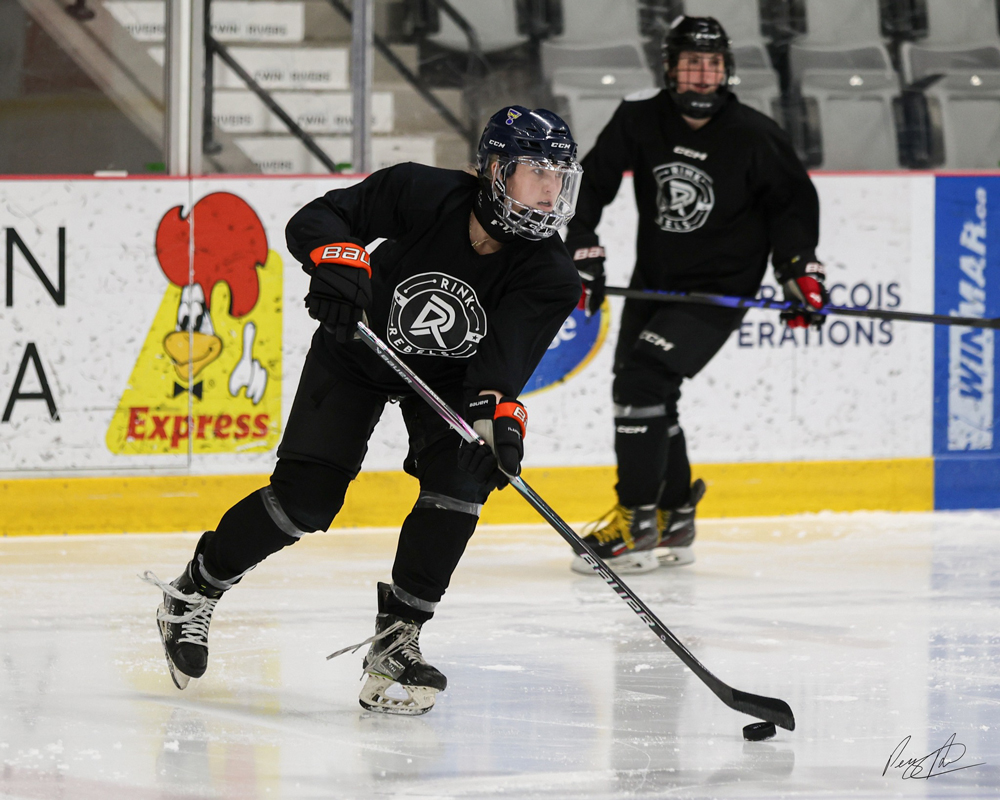
Grandy and his best friend, Ryan Burns, co-founded the Rink Rebels Female Hockey Organization in 2024 to offer no-pressure, fun-filled hockey events and tournaments for girls of all ages and skill levels, promoting inclusion, encouragement and belonging. The response to Rink Rebels was immediate: Hundreds of girls signed up to take part in the programs, the biggest of all being the Friendship Tournament, which is played in August. The Rink Rebel’s various programs and camps all take place in the spring and summer. They’re funded in part by sponsors, with additional support from the city, and run by volunteers.
Grandy is among the coaches, and so too is Ryan’s daughter, Ava, a high-school player who doubles as a mentor to the girls who take part.
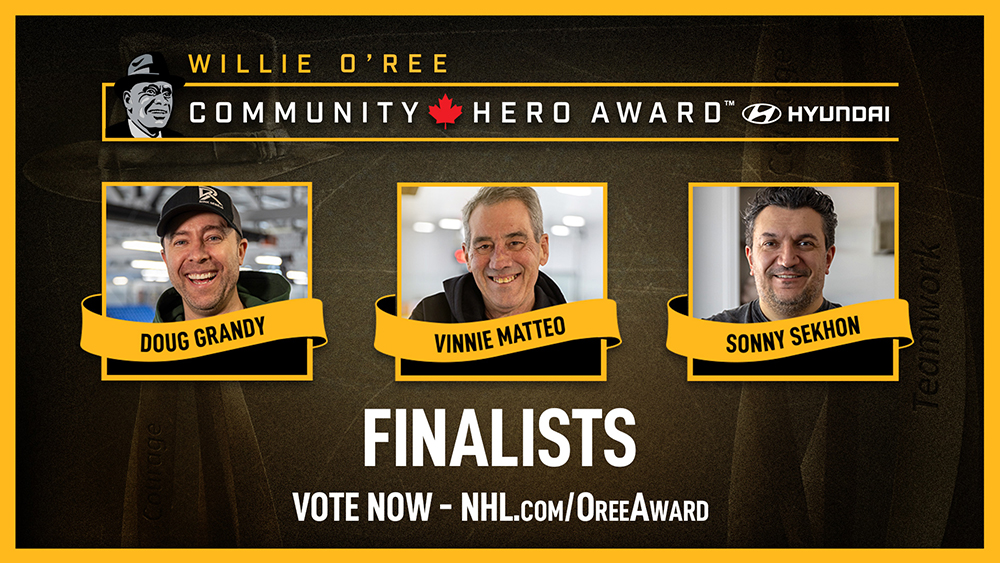
Rink Rebels programs run out of Willie O’Ree Place, named for the 90-year-old from Fredericton who is recognized as the first Black player in NHL history. And that’s especially fitting this year, because Grandy himself just earned a nomination for the NHL’s Willie O’Ree Community Hero Award, which is given annually to an individual who has positively impacted their community, culture or society through hockey.
Grandy is one of three Canadian finalists (fans can vote here from now through May 24). The winner will be announced next month and receives $30,000 to donate to a charity of their choice, while all finalists get $10,000 to donate to a cause of their choosing.
Grandy, 42, caught up with Sportsnet to talk about the honour of a nomination in O’Ree’s name, how he hopes to reduce the number of girls dropping out of sport in their teen years, and what helps fuel his work.
SPORTSNET: What is it like to be recognized in this way?
GRANDY: To be named around Willie's name — knowing his background, being from where he’s from — is magical. There's not a day that goes by in our city, for me especially, that I don't say his name, because we're always at his rink. So, this is one of those moments where you're like, ‘Alright, we're onto the right thing. We're doing what we set out to do and making sure that these girls are getting what they deserve,’ and it's just an absolute honour.
You know what Willie went through and what he strived for, to create that equality and break through those barriers. And I feel like the girls need that a lot — they need somebody to help champion that and push that forward, and that's really the birth of Rink Rebels.
Why did you feel the need to start Rink Rebels?
I grew up around the rink and so did my sister, Brooxxi. I always thought she was better than I was — she was a wonderful hockey player. She was captain of our team and at the time when we were younger, none of this was in place. She had to play with the boys all the way through.
It was a rougher game and back at that time, they didn't want girls there …. It was almost taboo when she was playing. And the support systems weren’t there to keep her playing.
That always stuck with me, and it pulled my heart a little. It's always been in my pocket as fuel to try to help out in some way. I stepped away from the game and became a firefighter, but then as my daughters started getting into the game, it really brought that back. I was like, ‘Why does this still exist? Why are we in 2024 and still having issues getting ice for girls? Our girls have to travel farther than the boys to play, we’re getting shorter periods, less refs, not as many floods, and there’s not as much funding going into the girls’ programs.’
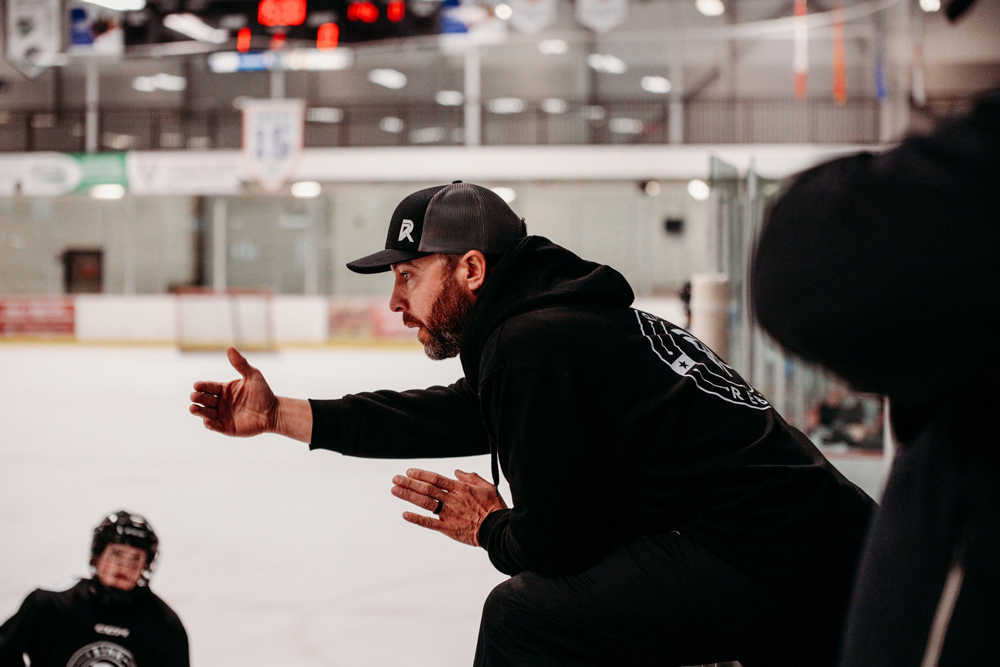
My father, he was a city counsellor here in Fredericton for 24 years, he’s one of the longest-sitting counsellors. So, I come from a long line of service. It’s born in us, and it just clicked after I had a conversation with my best friend, Ryan Burns, who’s the co-founder of Rink Rebels. His daughter, Ava, is in the U-18 division, and she plays high school. I said to him, ‘What can we do?’ He was like, ‘These girls need a place to play for spring. Can you come coach them?’ I jumped in, started helping them, and then the fire lit back up in me.
That turned into shooting clinics in your garage, right?
Yeah, and it just clicked. The girls started coming over more often, and the parents were coming and they were hanging out. It turned into more of a confidence-building therapy session than it was a shooting session, because they would start saying, ‘I’m not doing great in school,’ or this or that. It really opened my eyes on how to approach this through a trust and confidence connection more than like, ‘Hey, you got to go skate and work hard on the ice.’
What I noticed in my area is it just seems so hyper-competitive and there’s so much pressure … so I thought, we’ve got to make the sport accessible for all of the girls. We’ve got to make it fun and they’ve got to trust the people who they have behind them. That’s the core of what we're doing is we're trying to create a place for all of them at any time, to be able to walk into our programs, to have fun and leave a better person.
And we’re seeing these girls, they leave to go work at McDonald's or wherever it is, and they’re saying: ‘I can do this. I can step up in front of people. I can lead. I have the tools to be a team player.’ So, it’s not about the hockey. Hockey’s just a tool to help us to get these girls to understand how valuable they really are in life.
How does the ‘Friendship Tournament’ work?
We did it last year and we didn't even know how it was going to work, but we were brainstorming, ‘How do we really stay true to the idea that everybody can play?’
So, we put it out there: Whether you’re U-18, 15, whatever age group you are, you put your name in, no matter where you're from, and we're going to mix you up. You could be sitting on the bench beside a U-18 AAA player and it could be your first year playing hockey, and you guys are going to go out there and you're going to play together. This tournament isn’t about the hockey. It’s about the relationships.
We had families and parents — I can't even talk about it because it chokes me up, but we had dads come up to us crying, being like, ‘My daughter had an awful year this year, but this makes her want to come back and play hockey.’ And for us, it was everything.
So, it’s happening again this August and we have [Minnesota Frost players] Marlène Boissonnault and Abby Hustler and [Ottawa Charge reserve forward] Olivia Wallin coming to put on a day camp, so all the girls get to meet them. It's turning into something far beyond what I could have ever dreamed. And we’re so lucky because it’s going to reflect back to the girls and they’re going to get the benefits of all of this.
As of right now, we don't really operate through the season. The hope is eventually we can, but we don’t want to be pushing out what’s already in place. We want to make sure that everything's growing at the right time. So, for us, our place right now is these special camps and tournaments. We hosted a 47-team all-female hockey tournament in Fredericton a couple of weeks ago. It’s never been done, I don’t think, anywhere in the Maritimes before. It just goes to show you how much people are loving this idea, and it’s growing.
Last year, we had just under 300 participants for the Friendship Tournament. This year we’ll be close to 500 — we were able to expand, get some more ice time. We’re almost sold out, and the city has actually designated it a ‘festival.’ We’ve got food trucks and music and dunk tanks and this big event outside where we’ll give stuff away — and fireworks.
It's not about the hockey that's making them come back. And at that critical age, 13 to 18, if they feel like they belong with something and they're wanted, they're going to stick around.
The organization is called Rink Rebels, and you lean into the idea that this is a ‘rebellion.’ Was that a natural fit?
Yeah, and I think that's kind of how the girls stand behind it because they feel like, ‘It's our time. We’re into this.’ The Rebels part is just, ‘You know what? We're not putting up with this anymore. We're here to stay. We're going to do our thing.’ The rebellion is real, right?
It's such a cool feeling just to be like, ‘Yeah, I'm part of this thing.’ We try to promote that with everybody, with the kids and the parents, we don't turn anyone away. Jump on board and let’s go. It’s an open-door policy.
What are you most proud of when you think of all Rink Rebels has accomplished in its short history?
The biggest thing for me is the impact I’m seeing. After the first Friendship Tournament, I came home and I was exhausted and thinking, ‘This was so much work.’ I come home and there's a note on my front door from this little kid named Flo Good and she wrote: ‘Doug, I had a fantastic weekend. Thank you so much. Flo,’ with a big heart. I still have that note in a little box on my nightstand, and it keeps me going. Her dad, Nick, he told me: ‘That wasn’t me. That was her, she wanted to do that.’
That’s what I'm most proud of, those moments where you really did something for one of these girls.