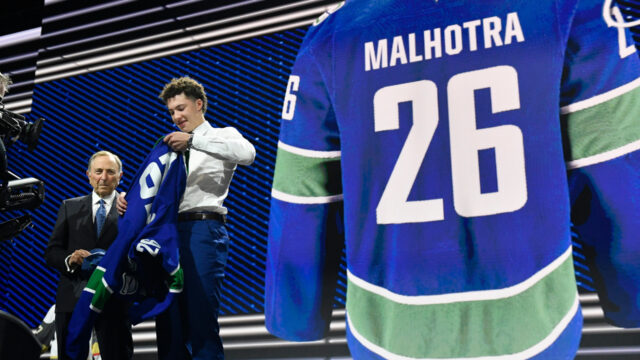
The Vancouver Canucks are clearly in the midst of a significant rebuild and have gone through significant changes over the past three seasons. The philosophy being implemented by GM Ryan Johnson and his staff emphasizes the importance of drafting and developing homegrown talent. Amateur scouting director Todd Harvey has been tasked with identifying assets to assist with the process and he and his staff have already added some quality pieces to the organization.
Here’s an update on how five of the Canucks' top prospects are developing so far this season.
Caleb Malhotra, 6-foot-2, 185 pounds, left shot centre
Malhotra was selected third overall at last June's draft. Here’s a reminder of how I projected Malhotra and his skill set following his draft eligible season when he played for the Brantford Bulldogs in the OHL:
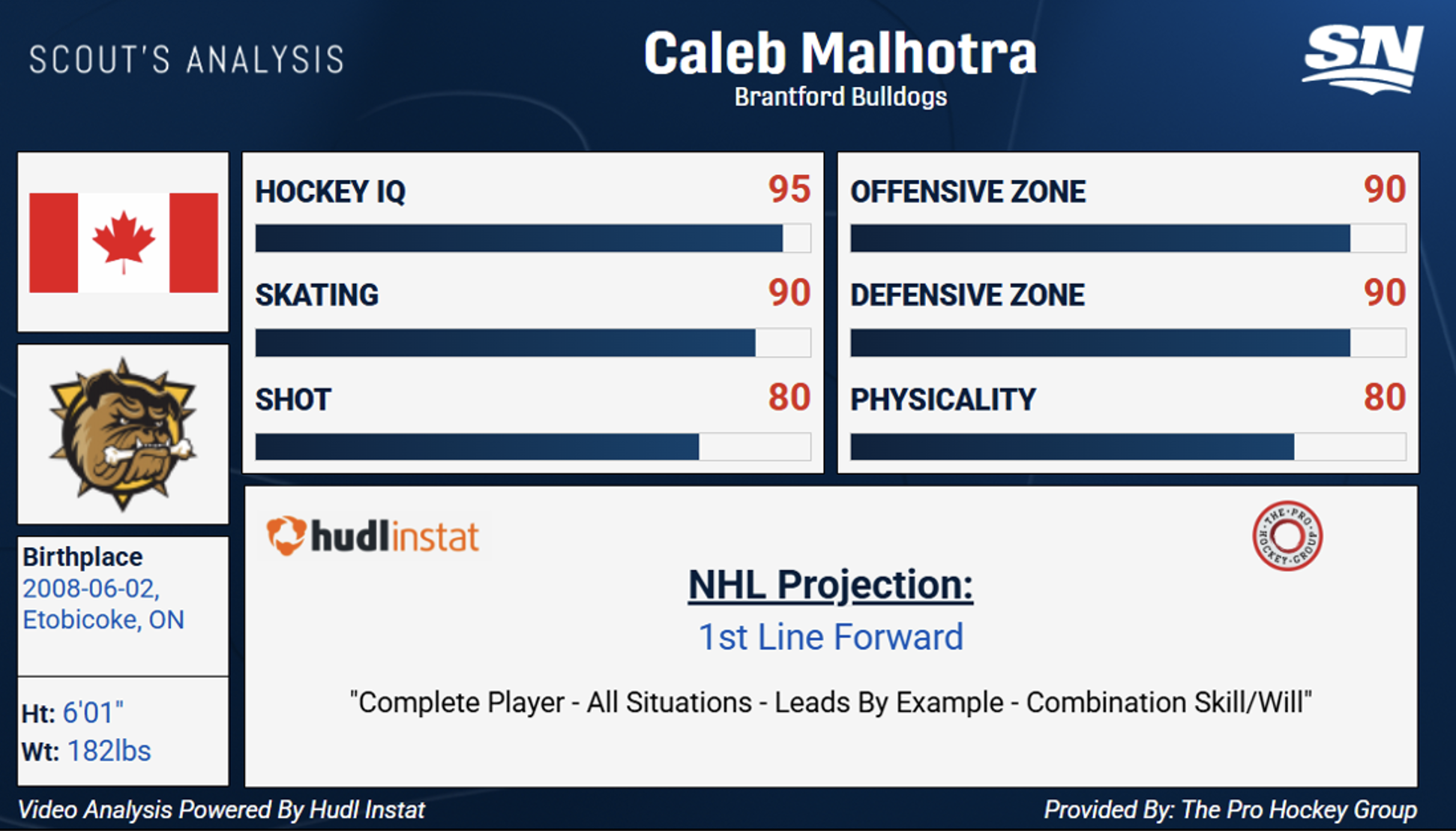
Malhotra has moved on to the NCAA ranks, currently developing at Boston University and playing to his strengths. Malhotra is averaging over 19 minutes per game of ice time and being deployed in all situations. His three-zone detail continues to stand out in addition to what he provides offensively.
Malhotra is the third-leading point producer for the Terriers, contributing 6G-7A in 14 games. Two of his tucks have come on the power play and one has come short-handed. His tidy plus-6 rating stands out.
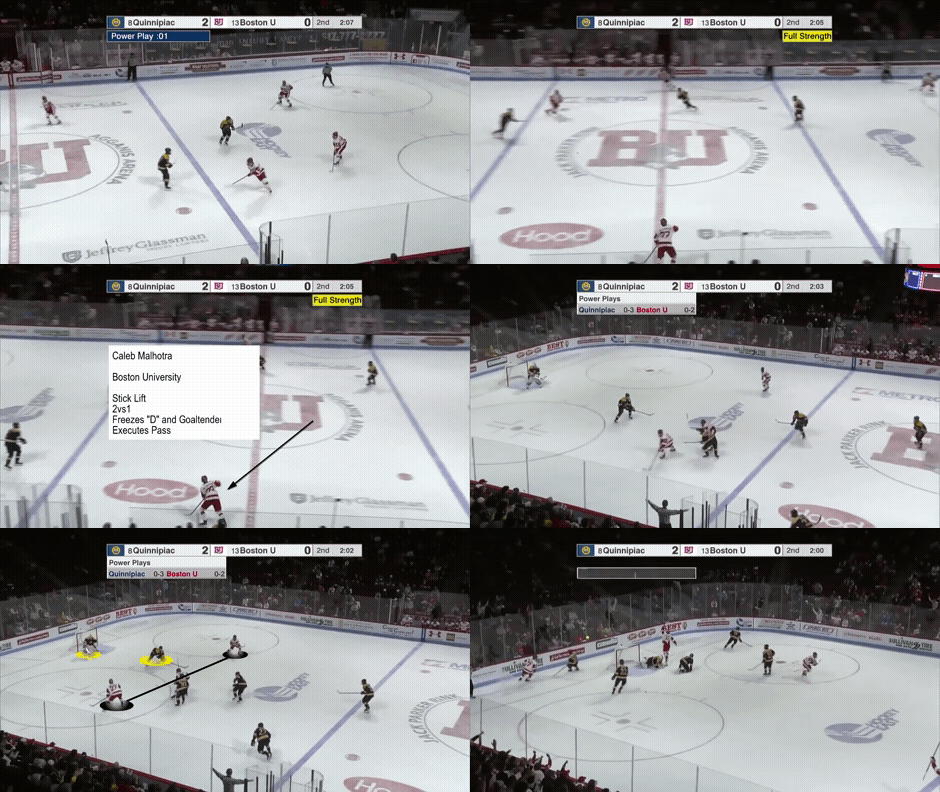
I expect Malhotra to play a significant role for Team Canada at the World Junior Championship next month in Edmonton and Red Deer. Canucks fans should be excited about what the future holds with Malhotra. In my opinion he projects to be a Bo Horvat kind of player.
Braeden Cootes, 6-foot, 185 pounds, right shot forward
Cootes was drafted 15th overall by the Canucks in 2025 and broke camp with the team that same fall before being returned to junior hockey. He’s currently developing in the AHL with Vancouver’s affiliate in Abbotsford, but he has missed some time this fall dealing with a lower-body injury.
What has always stood out for me when scouting Cootes is his high-end competitiveness. He works extremely hard to create turnovers when his group doesn’t have possession of the puck and equally hard when the puck is on his stick and he’s looking to create offence. He’s a true two-way forward on projection and one that can play both centre and the wing.
Cootes has only suited up for 12 AHL games this fall due to his injury, but he has contributed 3G-5A and averaged around 17 minutes of ice time per game. It should be noted that, depending on the situation of any game, Cootes has been deployed as little as 12 minutes while other games he has seen his ice time creep closer to 20 minutes.
Vancouver GM Ryan Johnson is on record stating the organization is focused on ensuring Cootes is healthy enough to represent Team Canada at the world juniors next month. It’s a rare commitment from an NHL club but one that makes sense in Cootes’ scenario.
Here’s an example of the relentless approach Cootes provides in the defensive zone. The NHL is the top league in the world. It might sound redundant to some readers, but the kind of effort and detail Cootes displays in this clip is imperative at the NHL level.
Adam Novotny, 6-foot-1, 210 pounds, left shot winger
Vancouver selected Novotny 24th overall in the 2026 draft. He’s already signed his entry-level contract and is tracking towards competing for a roster spot as early as next season.
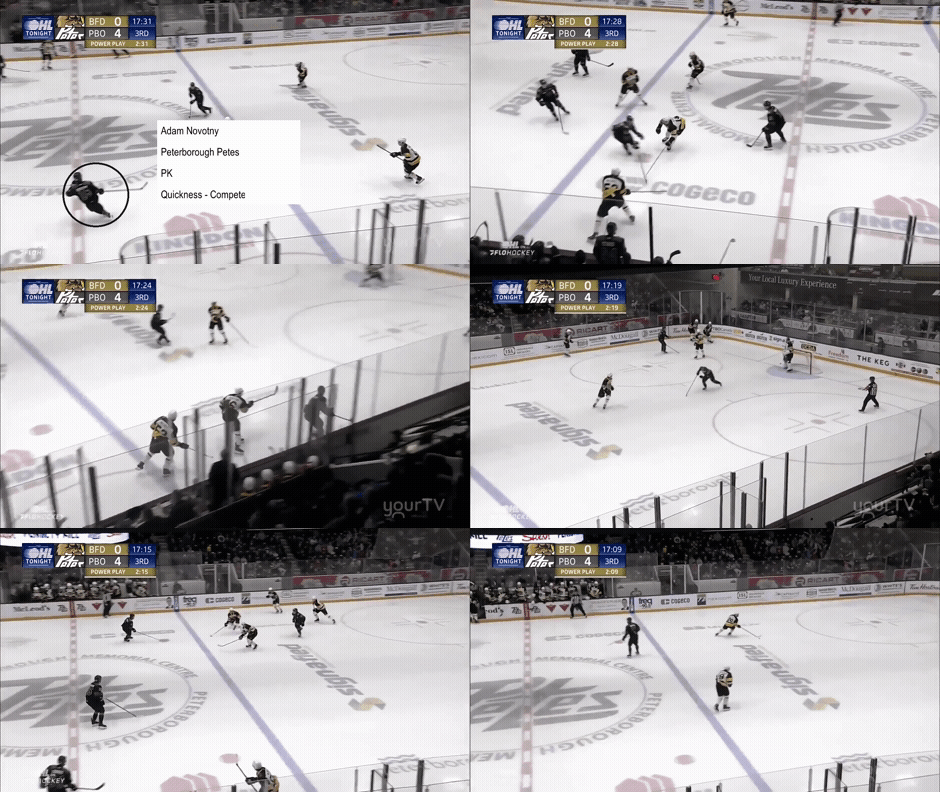
This season, Novotny is again playing in the OHL for the Peterborough Petes. He’s a lethal shooter who leans towards being a goal scorer. Novotny has already produced 16G-14A in 23 games this season, and nine of his goals have come on the power play. He’s averaging around 20 minutes per game of ice time and is being deployed in all situations.
Prospects like Novotny are easily identified for their goal-scoring prowess. But it’s equally important to evolve in other areas of their game if they are going to earn the trust of an NHL coaching staff. With that in mind, I’ve noticed how engaged Novotny has been on the penalty-kill in Peterborough. It’s an extra layer of commitment that stands out and makes Novotny even more valuable as a prospect.
Here’s an example of how relentless Novotny can be on and off the puck on the penalty-kill:
Brooks Rogowski, 6-foot-7, 240 pounds, right shot centre
The 33rd overall pick of the 2026 draft is a mountain of a man. His size and length provide him a useful advantage compared to smaller forwards.
Rogowski is averaging around 20 minutes per game of ice time playing for the Oshawa Generals. The bulk of his shifts come at even strength and on the power play. Rogowski averages 56 per cent in the face-off circle and has produced 5G-16A through his first 21 games this fall.
The Canucks drafted Rogowski recognizing he was going to need more time to develop than most prospects. Rogowski only committed himself to becoming a full-time hockey player in the past couple of years. Before that time, he was toiling with the idea of following in the footsteps of his father, Casey, and uncle, Scott, who were both baseball players drafted by the Chicago White Sox and Washington Nationals.
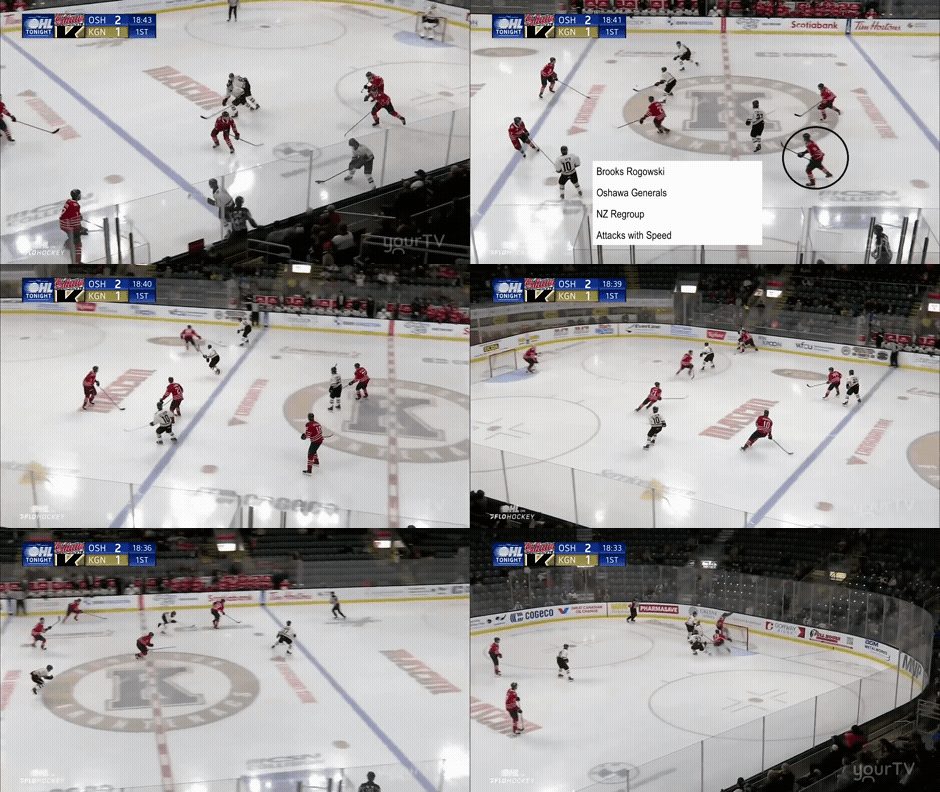
Rogowski is a Michigan native. He’s committed to Michigan State starting next season, but before then he appears on pace to easily eclipse his 15G-27A output he posted last year with the Generals. He’s exceptionally difficult to defend off the rush and in small areas. It’s going to take time, but Rogowski has a much more confident look to his entire game already this year.
Here’s an example of Rogowski attacking off the rush. A player of his stature exploding up ice with the puck on his stick, with the kind of coordination he displays in this clip, is obviously intriguing:
Sawyer Mynio, 6-foot-1, 185 pounds, left shot defenceman
Mynio remains an intriguing prospect for me. The 21-year-old defenceman was drafted in the third round (89th overall) in 2023 and is a useful, two-way, prospect who might fly under the radar at times.
Mynio is averaging over 21 minutes per game in the AHL and most of his ice time comes at even strength and on the power play. He plays the role of distributor and part-time quarterback on one of Abbotsford's power-play units. Mynio has contributed 1G-9A in 18 games this fall.
What’s going to give Mynio a chance at playing NHL games is his skating and hockey sense. Some people will point to his minus-11 rating this year as a massive concern, but when I broke down his game segments, he was on the wrong side of some poor puck luck more than he was responsible for a mistake that led to goals against. I don’t want to over-hype Mynio as a prospect, but a player who moves like he does, distributes the puck on time, and displays the awareness he does will have a chance at being a bottom-pairing defenceman in the league.
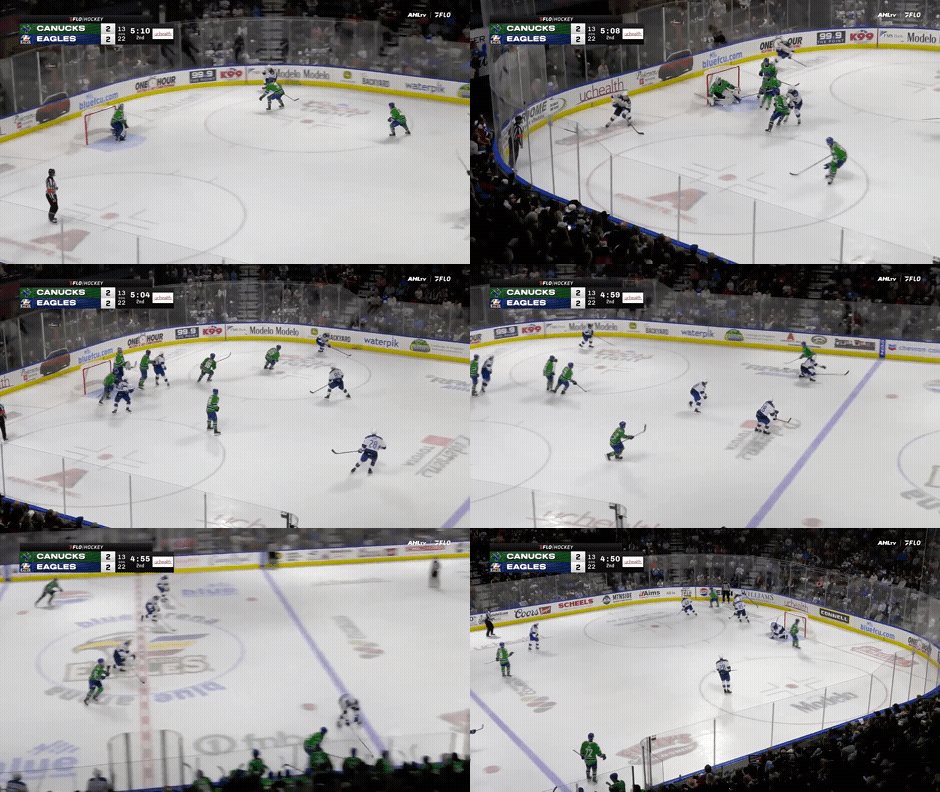
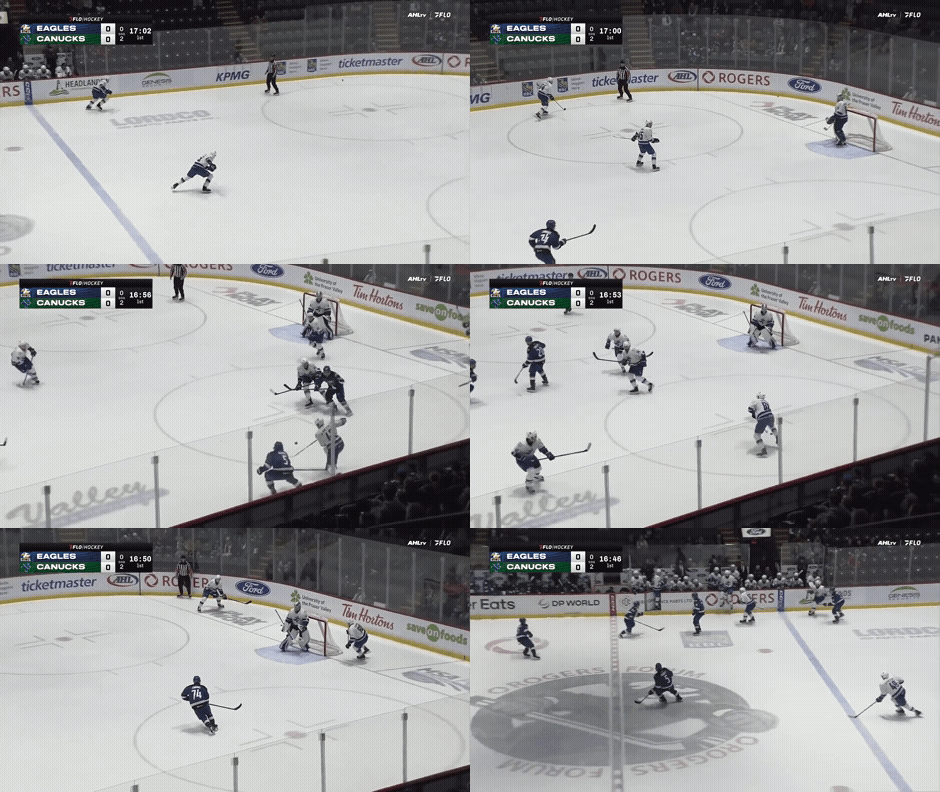
Here’s a clip of what I’m describing about the subtle approach of Mynio’s game:
It shows how Mynio has his head on a swivel identifying how his opponent is engaging on the forecheck. He makes a quick small area play with the puck, remains below the play, and eventually patiently regroups to provide an outlet.
Mynio isn't the flashiest and doesn't post the big offensive numbers some top prospects do, but it's this composure and IQ that stand out to me and will keep him on Vancouver's radar.