For Canadian MMA prospect Cody Chovancek, the road to the UFC Octagon was paved by patience, perseverance, and an unwavering work ethic.
From spending countless hours fishing as a kid in the small town of Petrolia, Ont., to overcoming setbacks on his path through the Canadian regional scene, Chovancek never lost sight of his ultimate goal.
Now, more than a decade after beginning his journey in combat sports, he's set to make his long-awaited UFC debut. Ahead of the biggest opportunity of his career, Chovancek reflects on the lessons he's learned from fishing, fighting and refusing to give up on his dream.
Sportsnet: Your nickname is "The Best Fisherman in MMA." That's not just an attempt at a witty nickname. You genuinely believe you're the best fisherman in the sport, right?
Chovancek: It's 100 per cent legit. I'm obsessed with fishing. I do it all the time, and I've been doing it my whole life. I grew up in Petrolia, Ont., which is a small blue-collar community just outside Sarnia. There wasn't a whole lot to do other than fighting and fishing. (Laughs.) As a kid, I'd spend hours at a time down by the water fishing while my mom was at work. As I got older, I had some cool opportunities to fish with professional anglers and people who were way better fishermen than me. I learned a lot from them, and I've just kept at it ever since. Fighting is primal, and fishing and hunting are primal too. I've always been drawn to those things.
Sportsnet: Fishing requires a lot of patience. At times, MMA does as well. Do you think this attribute has helped shape you as a fighter?
Chovancek: Definitely. When I first started fishing, patience was important because I was still figuring things out. Now, if I'm not catching fish right away, I know something's wrong. Fishing helps balance out the chaos of fighting. It's the yin and yang of my life. Training and fighting are intense, and fishing gives me a chance to slow down, think about techniques, think about fights, and just find some peace on the water.
Sportsnet: When did combat sports enter the picture for you?
Chovancek: When I wasn't fishing, I was already fighting a lot as a kid. We'd throw gloves on in the backyard, scrap with each other and watch the UFC. I started wrestling in high school. I picked things up pretty quickly and entered some club tournaments. Wrestling was the closest thing to fighting that I could do competitively. About three months after I started wrestling, I started kickboxing. I didn't even know that much about MMA at first, but once I got into kickboxing and found a gym, I realized that's what I wanted to do. Not long after that, I had my first amateur MMA fight.
Sportsnet: You eventually went to Thailand to train and develop your skills. That’s a big change in your day-to-day. What was that experience like?
Chovancek: It was incredible. A buddy of mine was connected to Craig Jones (renowned grappler) who was running grappling camps over there. He asked if I wanted to come along and basically helped sponsor the trip. I went when I was 17, and being half-Thai made it really special. When I landed there, it felt familiar, like I'd already been there before. It was a cool way to connect with my heritage. I learned some tough lessons too. I took a professional Muay Thai fight and got my (expletive) kicked. Looking back, that was probably the best thing for me. When you're just starting out and you feel what a much higher-level fighter is capable of, it shows you how much you still have to learn and what level you need to reach.
Sportsnet: That had to be a humbling experience. Instead of stepping away or reconsidering things, you doubled down. Why?
Chovancek: I never felt like it was time to quit. MMA is all about evolution. You're constantly learning and growing. There were definitely challenges. Sometimes you learn a lesson during a fight, sometimes it's in a training session. Every experience adds up. All those lessons have brought me to this moment and to making my UFC debut 11 years after I started chasing it. It feels destined, honestly. I feel better than I've ever felt, and I'm confident I'll put on a great performance.
Sportsnet: After Thailand, you returned to Canada to continue pursuing MMA. Another major leap of faith. What led you to Niagara Top Team, and how important was that move to your development?
Chovancek: There were definitely challenges. I started amateur MMA and went 4-0 pretty quickly. Then amateur MMA became illegal in Ontario, so those opportunities disappeared. I started focusing more on kickboxing and Muay Thai while waiting for MMA opportunities. One of the biggest turning points was moving to Niagara. Back home, there weren't many MMA gyms at the time. I'd be sparring heavyweights one day and lightweights the next because there just weren't enough bodies. When I came to Niagara and trained at Niagara Top Team, I realized what a real MMA gym looked like. There were training partners, coaches and structure. I talked to my parents and told them if I wanted to make this work, I had to move and chase it properly. They supported me completely.
Sportsnet: You turned pro and the winning habits continued in spectacular fashion. You won titles and eventually got the call to be on Dana White’s Contender Series in 2025. You worked your whole life for that call. What was that moment like?
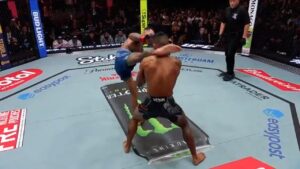
Chovancek: It was a dream come true. I was actually on a fishing trip in Nova Scotia with my boat when my coach called me and told me the news. It was one of those moments where everything felt worth it. I'd been putting on exciting fights and finishing opponents my whole career, so I knew I didn't need to reinvent myself. I believed I already had the style and ability to earn a UFC contract.
Sportsnet: How much pressure comes with an opportunity like that?
Chovancek: A lot. You're not just fighting another opponent. You're fighting for a life-changing opportunity. Dana White is sitting cageside. It's the biggest fight of your career. You know everything can change with a win. I feel that same excitement heading into this fight too. Go out there, do everything possible to win, and your life gets a whole lot better.
Sportsnet: Your Contender Series fight seemed to mirror your journey. You had to overcome adversity before earning the finish. Did that performance feel representative of who you are as a fighter?
Chovancek: That's who I am. I'm going to keep fighting for 15 minutes, 25 minutes, however long it takes. I'm never going to give up on myself. I've been through tougher situations than that. I know I always have the ability to change a fight with one punch. That's something I'll always carry with me.
Sportsnet: Now that you're finally in the UFC, have you taken some time to soak it all in? Does it feel like you've reached the top of the mountain?
Chovancek: We're still climbing. Getting to the UFC is a huge moment for me. I remember telling my buddies in high school that I was going to fight in the UFC one day, and they'd laugh and tell me to get real. Now it's actually happened. Sometimes it still feels surreal, but I know I belong here. Training with some of the best fighters in the world has given me that confidence. Most of all, I'm excited to represent Canada. I've been saying for a while that Canadian MMA is making a comeback. There are so many talented fighters coming up right now, and this UFC Edmonton card shows that.
Sportsnet: What's your message to the next generation of aspiring Canadian fighters?
Chovancek: Stay on the grind. The good thing is the sport has grown a lot in Canada. There are more promotions and more opportunities than ever before, especially for amateurs now that amateur MMA is legal again. My advice is to take the hard fights. Don't spend your time trying to pick and choose opponents. Go challenge yourself and improve. There are going to be hard times. You're going to be broke sometimes. You're going to want to quit. But if you keep working, keep hustling, and keep believing, you can make it happen. If a kid from a small town like Petrolia can make it to the UFC, then anybody can. You just have to be willing to sacrifice and trust the process.

 2:01
2:01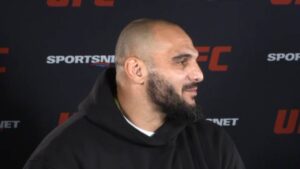 6:06
6:06